Last updated October 15, 2026
ADU Cost Breakdown: The Long Beach Homeowner’s Reference for 2026
The number that blindsides most Long Beach ADU owners isn’t construction. It’s the utility connection fees. Bringing a new sewer lateral to a detached ADU on a typical Long Beach lot runs $8,000 to $22,000 depending on distance and depth, and most online cost calculators don’t include it at all. That’s one line item, before a single wall goes up. Our complete guide to ADU in Long Beach names the real numbers for 2026: permit fees, soil reports, architectural drawings, utility rough-ins, and the labor rates Long Beach contractors actually charge. By the time you finish reading, you’ll have a budget you can defend, not a range so wide it’s useless.
Quick Answer
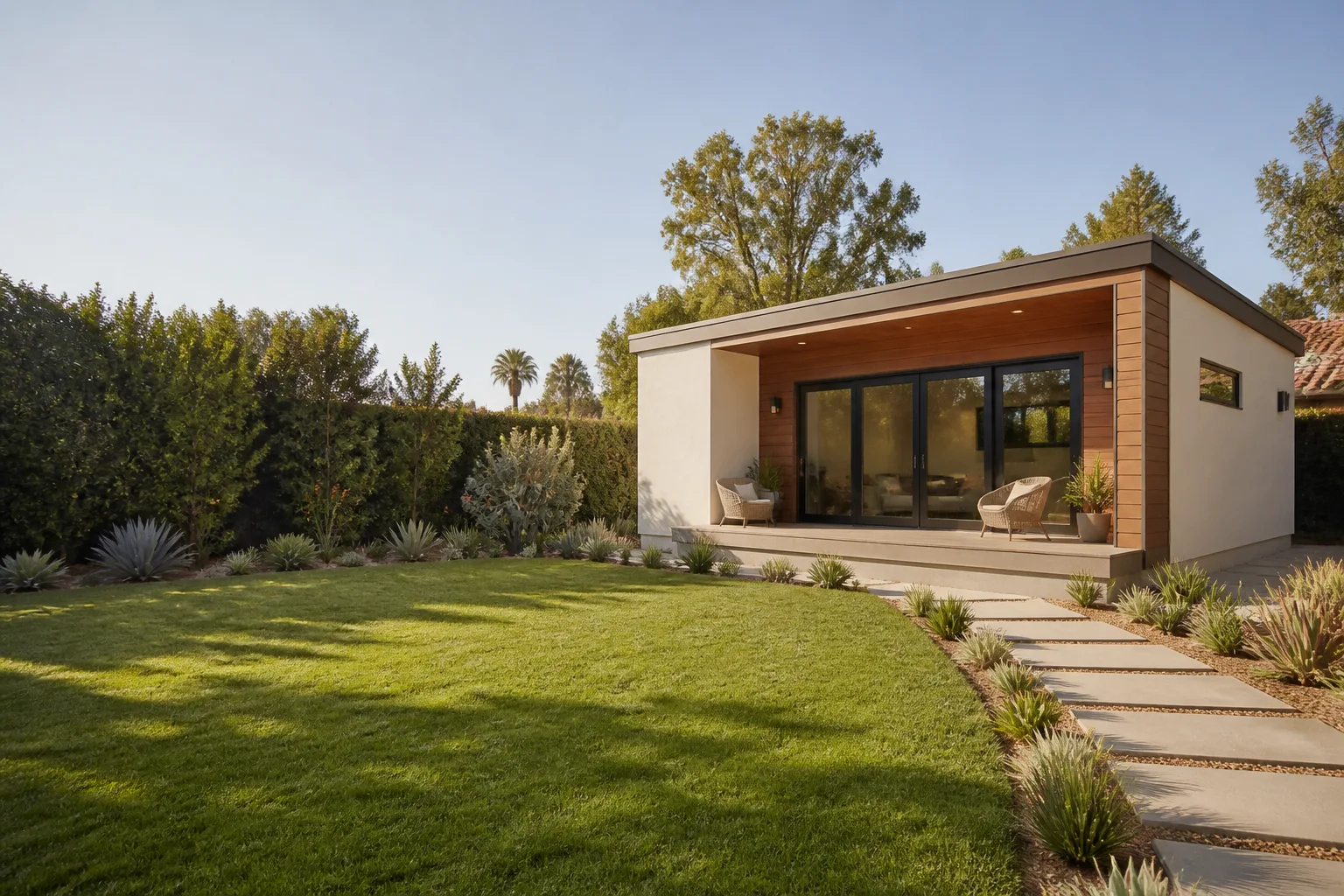
A detached ADU in Long Beach costs between $180,000 and $380,000 all-in for 2026, with a 500-square-foot one-bedroom unit typically landing between $220,000 and $280,000 when you include soft costs like permits, drawings, and utility connections. Prefab ADUs from brands like Abodu and Cover run 10 to 20 percent less than site-built for the unit itself, but site preparation and utility rough-ins cost the same either way. A conversion of existing space (garage or basement) starts around $120,000.
Table of Contents
- What Actually Goes Into the Price: Line-Item Costs for 2026
- Long Beach Permit Fees by ADU Type and Size
- Prefab vs. Stick-Built: Where the Savings Are Real (and Where They Aren’t)
- The Five Utility Connection Costs Every Calculator Skips
- Soft Costs: The 12 to 18 Percent Nobody Quotes Up Front
- How a Written Fixed-Price Contract Makes These Numbers Binding
- Common Mistakes to Avoid
- When to Call a Professional
- Frequently Asked Questions
- The Bottom Line
What Actually Goes Into the Price: Line-Item Costs for 2026
Most ADU cost guides throw out a single number and call it a day. That’s not a budget. A budget breaks down into categories, and each category has a range that reflects what’s actually happening in Long Beach right now. Here’s what we’re seeing on real projects across the city in 2026, line by line.
The single largest cost bucket is the structure itself. For a site-built detached ADU, framing, roofing, drywall, insulation, windows, and doors run $140 to $220 per square foot, which puts a 500-square-foot unit at $70,000 to $110,000 before finishes. A prefab panel system from Abodu or Cover typically lands at $110 to $160 per square foot for the factory-built shell, with on-site assembly labor included. That’s the first place prefab saves real money, though not the last place you’ll spend it.
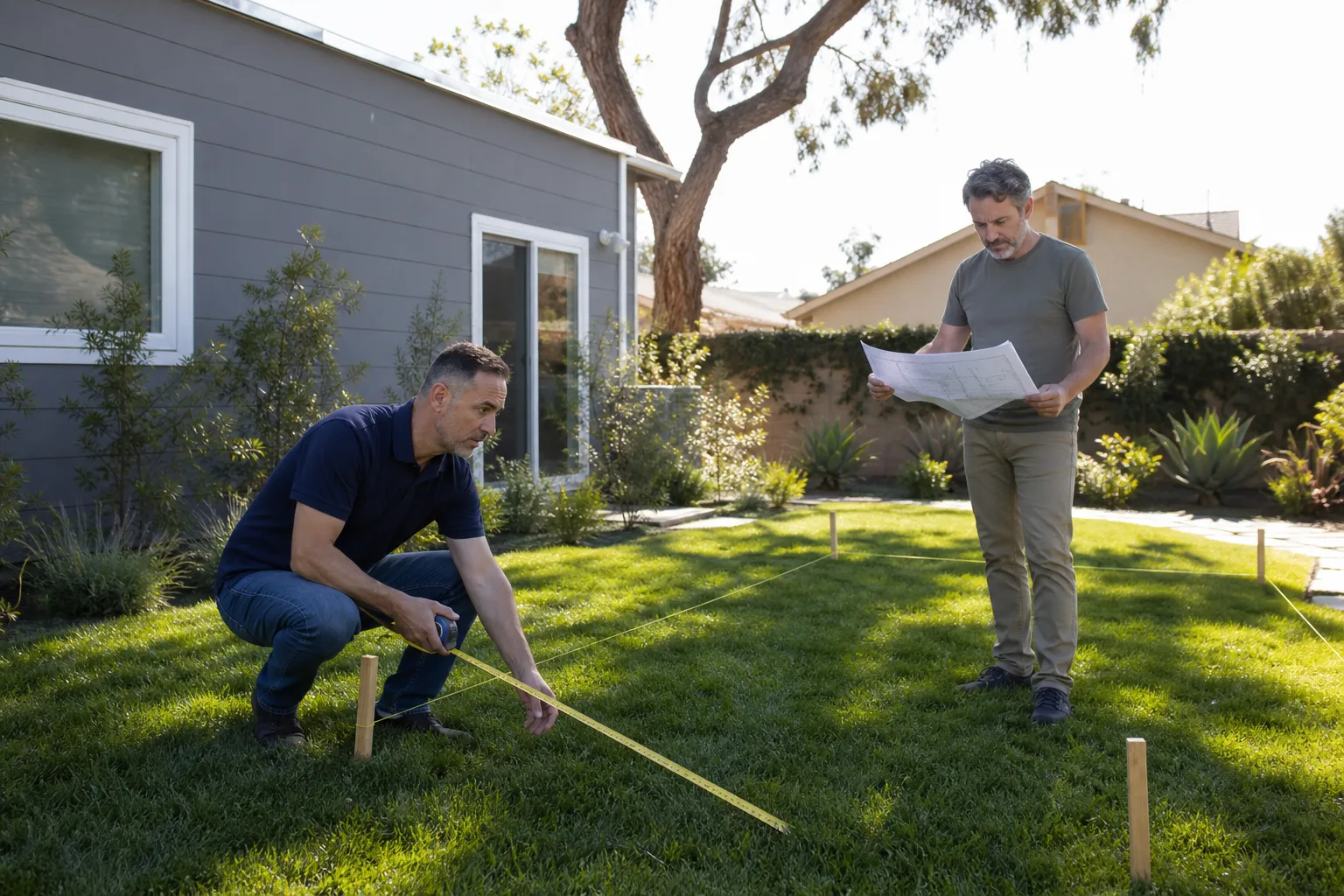
Site preparation is the second bucket, and it doesn’t care whether your unit is prefab or site-built. Grading, foundation work, and trenches for utilities run $25,000 to $55,000 on a flat Long Beach lot, and more if your yard has a slope or you’re digging near mature trees with root systems that need protection. Older Long Beach neighborhoods like Belmont Heights and Rose Park often have tighter setbacks and older sewer lines, which adds complexity and cost. For ADU warning signs every Long Beach homeowner should watch for, see our neighborhood-specific reference.
Finishes are the third bucket: flooring, kitchen cabinetry, bathroom tile, lighting, and paint. Homeowners consistently underestimate this category. A functional but basic finish package runs $35 to $55 per square foot. Mid-range finishes with quartz counters and nicer fixtures run $60 to $90 per square foot. High-end finishes climb past $100 per square foot. For a 500-square-foot ADU, budget $17,500 to $45,000 for finishes, depending on your taste.
The fourth bucket is mechanical, electrical, and plumbing (MEP). A new 100-amp subpanel, mini-split HVAC system, tankless water heater, and all rough-in and finish plumbing typically runs $28,000 to $42,000 for a one-bedroom unit. If your main house panel can’t handle the additional load and you need a service upgrade, add $4,000 to $8,000. That’s a cost that only shows up after an electrician looks at your existing panel, and it’s one of the most common ways budgets creep upward.
Here’s the full line-item breakdown in table form so you can see how the categories stack:
- Site-built structure (500 sq ft at $140 – $220/sq ft): $70,000 – $110,000
- Prefab structure (500 sq ft at $110 – $160/sq ft): $55,000 – $80,000
- Site preparation and foundation: $25,000 – $55,000
- Finishes: $17,500 – $45,000
- Mechanical, electrical, plumbing: $28,000 – $42,000
- Permits and fees: $8,000 – $18,000
- Soft costs (drawings, engineering, soil report): $12,000 – $25,000
- Utility connections: $15,000 – $35,000
That puts a realistic all-in range for a 500-square-foot detached ADU in Long Beach at $180,000 to $330,000 for 2026, with the midpoint landing around $255,000. A garage conversion saves on structure and site work but still hits $120,000 to $200,000 by the time utilities, permits, and finishes are done. If you’re just starting to research, the ADU Builders in Long Beach guide walks through what to look for when comparing contractors.
Long Beach Permit Fees by ADU Type and Size
Long Beach charges building permit fees on a sliding scale based on valuation, and the city updated its fee schedule for the 2025 – 2026 cycle. What you actually pay depends on whether you’re building a detached unit, converting existing space, or adding a JADU (junior accessory dwelling unit) inside your existing home. Here’s what the numbers look like in practice.
Detached ADUs under 750 square feet typically carry total city fees between $6,000 and $12,000, including building permit, plan check, and utility development impact fees. Over 750 square feet, expect $10,000 to $18,000. The jump isn’t just about size; larger units trigger higher school impact fees (Long Beach Unified School District currently assesses around $4.50 per square foot on new residential construction), plus higher park and recreation mitigation fees.
Garage conversions run cheaper on permits because you’re not adding footprint, but there’s a catch. If your garage was built before the early 1990s, the slab may not meet current foundation requirements, and you’ll need a structural retrofit. That means a structural engineer’s stamp on the plans and possibly new footings, which pushes permit and plan check costs to $7,000 to $14,000 even though the fee schedule itself reads lower.
JADUs, which are small units of up to 500 square feet created within the existing walls of a single-family home, carry the lowest fees in Long Beach: $3,000 to $7,000 total. State law requires cities to keep JADU fees minimal, and Long Beach follows that mandate. The tradeoff is that JADUs can’t be sold separately and typically share utilities with the main house, which limits rental income potential.
One thing every Long Beach homeowner should know: the city also charges a separate sewer connection fee when you add a new unit, and it’s billed at permit issuance. That’s $3,000 to $6,000 depending on your sewer district, and it’s in addition to the lateral construction cost we’ll cover in the utility section below.
A note on timelines: plan check for a standard detached ADU in Long Beach is running 4 to 8 weeks in 2026, and over-the-counter review for simple JADU conversions can be same-day if your plans are clean. Factor that into your project schedule, not your budget, but late permits can idle a crew, and idle crews still draw pay.
Prefab vs. Stick-Built: Where the Savings Are Real (and Where They Aren’t)
The prefab pitch sounds great: factory-built precision, fixed pricing, and a build time measured in weeks instead of months. In Long Beach, the pitch mostly holds. What gets left out of the brochure is that prefab saves on the structure, not on your site. Here’s the honest math.
Where prefab saves. A factory-built shell from Abodu, Cover, or Dvele costs less per square foot than site-built framing because the labor happens in a controlled facility, not on a Long Beach street where parking, weather, and scheduling add hours. A 500-square-foot prefab unit typically undercuts site-built stick framing by $15,000 to $30,000 on the structure alone. Speed is the second savings: a prefab unit can be set on its foundation in a single day once site work is done, compared to 4 to 6 months of on-site framing, roofing, and drywall for a stick-built ADU. Every month of construction is a month you’re not collecting rent, and in Long Beach’s rental market, where one-bedroom ADUs fetch $1,800 to $2,600 a month, finishing four months earlier puts $7,000 to $10,000 back in your pocket.
Where prefab doesn’t save. The foundation, utility rough-ins, site preparation, and finishes cost the same whether your walls arrive on a truck or get framed in your backyard. A prefab unit still needs a poured foundation, still needs a sewer lateral trenched from the street, still needs electrical service pulled from your main panel. Those are site costs, and they’re identical either way. James Hardie siding, which many Long Beach homeowners choose for its fire resistance in our dry summers, costs the same whether it’s applied to a prefab shell or a stick-built frame.
One more nuance: prefab companies quote a base unit price that covers their factory work and standard assembly. Customization beyond what’s in their catalog, whether it’s a different window configuration or upgraded insulation, adds cost quickly and can eat the savings. If you want a truly custom floor plan, site-built starts to pull ahead on value. If a catalog unit fits your site and your needs, prefab wins on price and speed. The team at Benson ADU Long Beach is authorized to build with both approaches, which means we can show you a real price comparison for your lot rather than arguing one method is universally better.
The Five Utility Connection Costs Every Calculator Skips
This is the section that separates a real budget from a fantasy. Every ADU needs five utilities: water, sewer, gas (unless you go all-electric), electric, and low-voltage for internet and cable. Each one connects to your existing service or the city main, and each one costs real money in Long Beach. Here’s what contractors charge in 2026, line by line.
- Sewer lateral: $8,000 – $22,000. This is the big one. A new sewer lateral runs from your ADU to the city sewer main, which usually sits under the street. Distance, depth, and whether you have to cut into asphalt drive the price. On a standard Long Beach lot where the ADU sits 40 to 60 feet from the main, a trenched lateral runs $8,000 to $14,000. If the main is deep or you’re trenching under a driveway or tree roots, $16,000 to $22,000 is realistic. Some contractors quote $5,000 and “find” complications later. Get this number in writing.
- Water service: $3,000 – $7,000. A new water line taps your existing main service and runs to the ADU. In Long Beach, this typically means a 1-inch or 1.5-inch copper or PEX line, a new shutoff valve, and possibly a backflow preventer if the city requires one for your configuration. Simpler than sewer, but still a real cost.
- Gas service: $2,500 – $6,000. If your ADU will have gas heat, a gas water heater, or a gas range, you need a new gas line run from the meter. Long Beach permits typically allow this to be run above-ground along the house, which keeps costs down. If your ADU is all-electric, this cost disappears, which is one reason all-electric units are becoming more popular in Long Beach: lower upfront cost and no gas line to maintain.
- Electrical service: $4,000 – $8,000. A new subpanel in the ADU, wire run from the main panel, and grounding. If your main panel is older or undersized, you’ll also need a main panel upgrade at $4,000 to $8,000. This is one of the most common surprises, and a good contractor checks the panel before quoting.
- Low-voltage: $800 – $1,500. Conduit and cable for internet and cable service. This is the smallest line item but still needs a trench or wall run, and it’s one homeowners forget entirely.
Total utility connections: $15,000 to $35,000, and that’s separate from the plumbing and electrical work inside the ADU. Any cost calculator that doesn’t include this category is not your friend, and any contractor who doesn’t mention it in the first meeting is either inexperienced or setting you up for a change order.
Soft Costs: The 12 to 18 Percent Nobody Quotes Up Front
Soft costs are the line items that happen before construction starts, and unless you’ve built before, you’ve probably never heard of half of them. On a $250,000 ADU project in Long Beach, soft costs typically add $30,000 to $45,000. That’s a new car. Here’s where it goes.
Architectural drawings run $8,000 to $18,000 for a custom ADU design. If you’re using a prefab system, some of that cost is absorbed into the unit price, since the manufacturer already has standard plans. That’s another quiet advantage of prefab: the design work is already done and permitted in most cases.
Structural engineering runs $2,500 to $6,000, more if your site has slope issues, expansive soil, or an existing structure with nonconforming conditions. Long Beach’s older housing stock means structural surprises are common, especially in homes built before the 1950s.
Soil report runs $1,800 to $3,500. The city requires it for new detached structures, and it tells your engineer how much foundation you need. Long Beach sits on a mix of sandy loam and, in some neighborhoods, former wetland fill. Soil conditions vary block to block, and the report is not a corner to cut.
Title report runs $600 to $1,000 and is required if you’re financing the build. It confirms property lines, easements, and any recorded restrictions that could affect your ADU. If you’re paying cash, you can technically skip it, but financing almost always requires it.
Survey runs $1,500 to $3,000 if you need one. Some Long Beach lots have never been surveyed, and a professional survey protects you from building into a setback or over a neighbor’s line. Given how tight some Long Beach lots are, a survey is cheap insurance.
One way to keep soft costs down: choose a contractor who can bundle the design and engineering work in-house or through established prefab partners. When you work with an independent architect and then hand plans to a contractor, you’re coordinating two separate schedules and paying two separate markups. A Home Addition Contractor in Long Beach who manages design, engineering, and construction under one contract typically saves you 5 to 8 percent on soft costs through coordination alone.
How a Written Fixed-Price Contract Makes These Numbers Binding
Here’s the uncomfortable truth about residential construction in Long Beach: most contractors quote a number verbally, present a contract with allowances and exclusions, and then bill you for overages when conditions change. The estimate was aspirational. The contract was written to protect the contractor. What you want is the opposite: a written fixed price that names specific products, specific fixtures, and specific site work, with no allowance for “unforeseen conditions” except the ones genuinely outside anyone’s control.
A fixed-price contract should include:
- Exact line items, not categories. “Plumbing: $18,000” is a category. “PEX hot and cold water lines, 1-inch main run, two drain lines, tankless water heater install: $18,000” is a line item. You can hold them to one.
- Named materials. The contract should say “James Hardie plank siding” or “Abodu prefab unit” or “Kwickset deadbolt,” not “quality materials as selected by contractor.”
- A change order process. If the contractor finds a buried concrete slab where the sewer trench is supposed to go, that’s a legitimate change order. But a change order should be in writing, priced, and signed by you before the work happens. If a contractor can’t produce a written change order for a surprise, they shouldn’t be billing for it.
- A payment schedule tied to milestones. Deposit, foundation complete, framing complete, drywall complete, final walkthrough. Never pay the full balance before the final inspection passes.
- Warranty terms in writing. Workmanship warranties are common, but what they cover varies wildly. Ask what happens if a leak appears 11 months after completion, and get the answer in the contract.
When a contractor refuses to commit to a written fixed price, that’s information. It means they know from experience that their verbal estimates run low, or they plan to recapture margin through change orders. Either way, you should walk. Our model at Benson ADU Long Beach is a written price before any work starts, because we’ve seen too many Long Beach homeowners handed a verbal estimate and then handed a bill that looks nothing like it. The price you sign is the price you pay, and if we can’t price a line item accurately before we start, we tell you before you sign, not after we’re in the ground.
For homeowners weighing a full addition alongside an ADU, our Room Addition Contractor in Long Beach page covers the decision points, including which one gets you the better return in this market.
Common Mistakes to Avoid
- Budgeting for the unit but not the utilities. As covered above, sewer, water, gas, electric, and low-voltage connections run $15,000 to $35,000 on a Long Beach lot. If your spreadsheet doesn’t have that line, your budget is fiction.
- Skipping the soil report to save $2,500. Long Beach soil varies block by block, and a foundation built on assumptions is a foundation that cracks. The report costs less than one repair visit.
- Paying a large deposit before plans are approved. A reasonable deposit is 10 to 15 percent. If a contractor wants 40 percent before permits are in hand, they’re financing their other projects with your money.
- Choosing a contractor based on the lowest bid. Low bids in Long Beach usually mean excluded line items, not efficiency. Compare line items, not bottom lines. The bid that’s $40,000 lower is missing something.
- Ignoring the main panel capacity. Many Long Beach homes built before the 1980s have 100-amp panels. An ADU with AC, a clothes dryer, and an electric range can push you past capacity, triggering a $4,000 to $8,000 panel upgrade mid-project.
- Not checking the sewer main depth. Depth and location of your sewer main determine most of the lateral cost. Have your contractor or a sewer camera inspection confirm it before you sign anything.
- Assuming a permit means the price was fair. A permit means the plans met code. It says nothing about whether the finishes match what you paid for. Inspect the work against the contract before every payment.
When to Call a Professional
If you’re reading this and realizing your “rough budget” has a $30,000 hole where utility connections should be, that’s the moment to get a real number. You should also call a professional if your lot has unusual conditions: a steep slope, a shared driveway, existing retaining walls, or property lines that seem uncertain. Those are the projects where generic cost calculators fail hard and site-specific pricing is the only thing that matters. If you have a written estimate from another contractor and want a second set of eyes on the line items, bring it in. A second opinion from someone who builds in Long Beach every day can confirm it’s fair or show you what’s missing, or explore our more guides & resources to compare line items yourself. Benson ADU Long Beach offers free estimates in Long Beach – call (562) 362-3885 to get a written, line-item price for your project.
Frequently Asked Questions
A detached ADU in Long Beach costs $180,000 to $380,000 all-in for 2026, including construction, permits, soft costs, and utility connections. A 500-square-foot one-bedroom unit typically lands between $220,000 and $280,000, while a garage conversion starts around $120,000. Call (562) 362-3885 for a written estimate on your specific site.
Long Beach permit fees for a detached ADU under 750 square feet run $6,000 to $12,000, while units over 750 square feet run $10,000 to $18,000 when school impact and park mitigation fees are included. Garage conversions run $7,000 to $14,000, and JADUs inside an existing home run $3,000 to $7,000.
Yes, a prefab ADU from a company like Abodu or Cover typically costs 10 to 20 percent less than site-built for the structure itself, saving $15,000 to $30,000 on a 500-square-foot unit. Site preparation, foundation, utility connections, and finishes cost the same either way, so the total savings on a typical project is $20,000 to $40,000.
Total utility connections for a detached ADU in Long Beach run $15,000 to $35,000 in 2026, with the sewer lateral alone accounting for $8,000 to $22,000. Water, gas, electric, and low-voltage connections make up the remainder, and these costs are separate from plumbing and electrical work inside the unit.
It shouldn’t, if your contract is written as a fixed price with named materials and line-item pricing. Legitimate change orders happen when genuine site conditions differ from what the contract assumed, such as hitting unexpected concrete below grade, but those should be in writing and signed by you before the work proceeds. A contractor who can’t commit to a written price before starting is one to avoid.
Plan check at the city runs 4 to 8 weeks for a standard detached ADU, and construction takes 4 to 6 months for site-built or 2 to 4 months for a prefab unit after site preparation. Total timeline from signed contract to move-in typically runs 6 to 10 months for site-built and 4 to 7 months for prefab.
A one-bedroom ADU in Long Beach rents for $1,800 to $2,600 per month in 2026, which against a $250,000 build cost produces gross rent of $21,600 to $31,200 annually before expenses. Net of property tax increases, insurance, and maintenance, most detached ADUs in Long Beach cover their carrying costs within 8 to 12 years while building equity from day one.
The Bottom Line
A realistic 2026 budget for a detached ADU in Long Beach is $180,000 to $330,000 all-in, with the soft costs and utility connections that most calculators skip adding 20 to 30 percent on top of the structure itself. Prefab saves real money on the shell, but your site costs are the same either way, and a written fixed-price contract is the only thing that makes these numbers binding instead of aspirational. Do the line-item math before you talk to a contractor, demand named materials and written change orders, and get the utility connection numbers out on the table in the first conversation. A good builder will show you exactly where the money goes. A great one will put it in writing before you commit a dime.
Written by Troy Eastman, Owner at Benson ADU Long Beach, serving Long Beach since 2006.
For more on what to look for when choosing a builder, start with our Benson ADU Long Beach home page, or call (562) 362-3885 to schedule a free estimate.