Dvele Site Prep & Utilities: The Long Beach Owner’s Guide
We stock and install Dvele-compatible site prep and utility connection components in Long Beach, with typical installed pricing running $2,800 to $9,600 depending on what failed and how deep the repair goes. Most single-component failures we see are done in one visit, and we carry the common failure items on the truck. Owners usually discover a site prep or utilities issue the way our clients in Belmont Shore and Wrigley have: a water heater that won’t hold pressure after the main connection corroded, a sewer cleanout backing up after a root invasion, or a main electrical disconnect that trips when the panel draws over 80 amps.
Dvele builds a tight, high-performance envelope, but its site-side systems – the parts that connect the module to the city grid, sewer, and water supply – live outside that controlled environment and take the full brunt of Long Beach’s coastal air and shifting soil. Salt corrosion, settling pads, and utility trench movement are the usual suspects, and they don’t announce themselves politely.
Which Dvele Models This Applies To
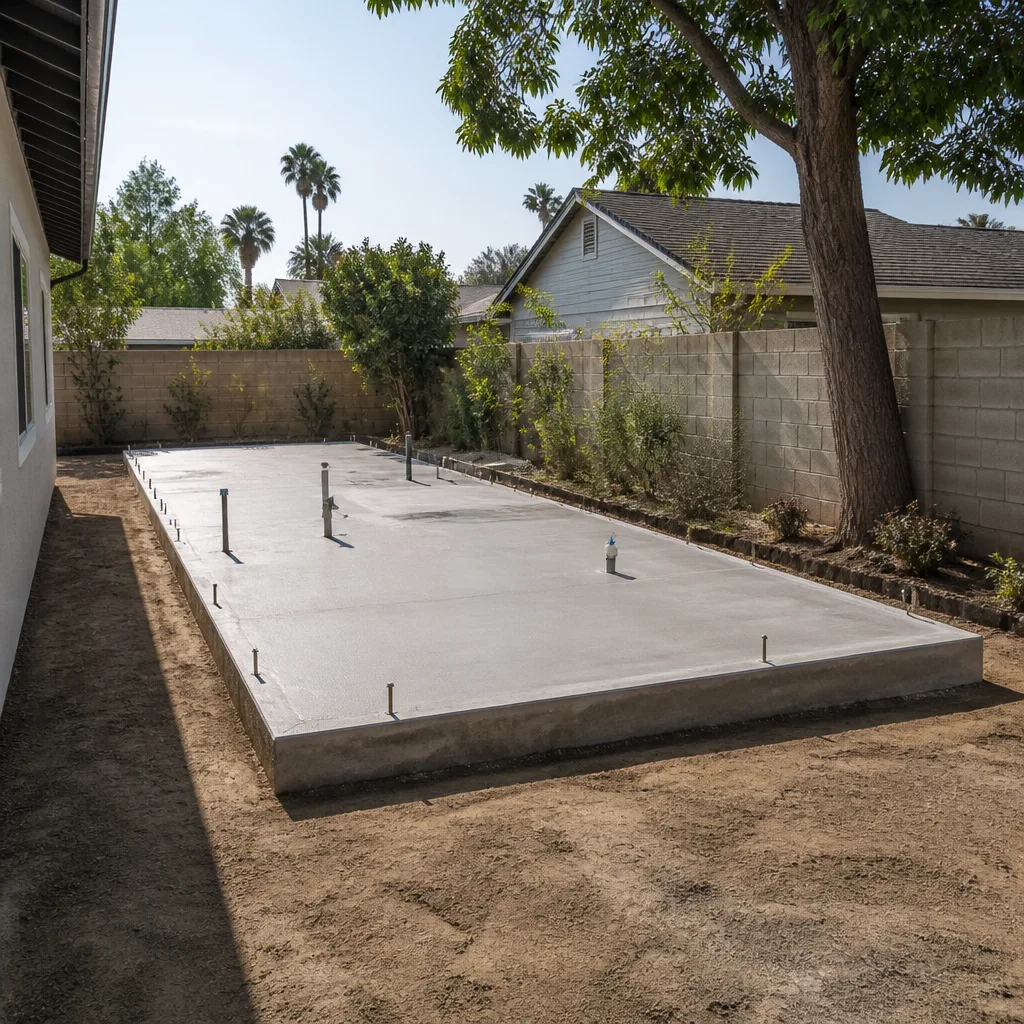
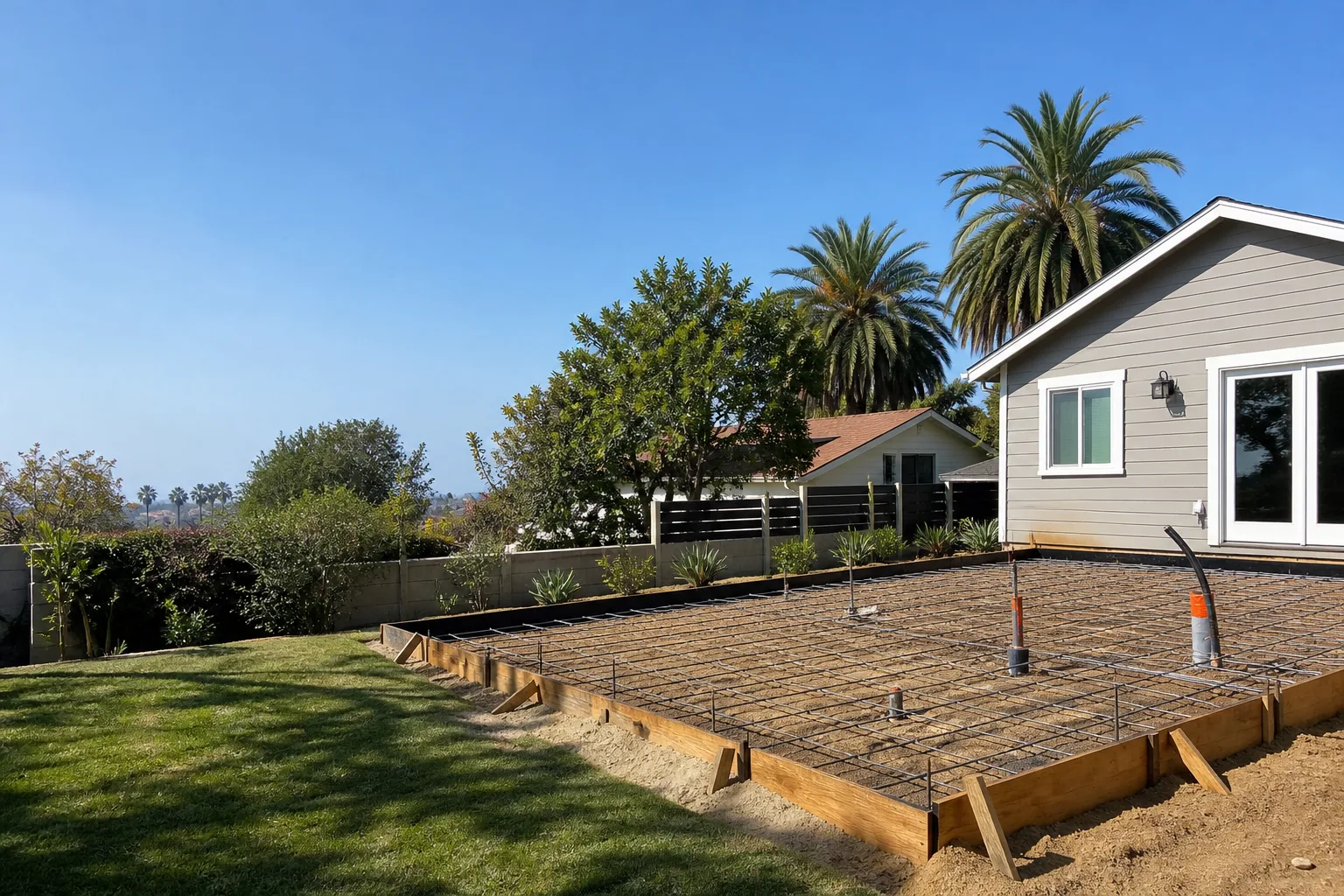
This page covers the site prep and utilities for Dvele’s current production homes, including the A-frame series, the Flux model, and the larger IQ and Titan units that have shipped to California in increasing numbers since 2021. While the module itself is factory-built, every Dvele still lands on a site-built foundation or pad, and every Dvele still needs field-connected water, sewer, electrical, data, and gas or propane runs. That’s where the failure points live.
If you’re trying to identify a specific part, look for the white service tag inside the utility closet or the exterior chase panel. Dvele labels each utility connection with a QR code and a spec sheet that lists the exact fitting, gauge, or pipe diameter used at that connection point. The single most important piece of information is the connection size and material: Dvele consistently specs PEX-A for cold water runs and uses 2-inch schedule 40 ABS for main sewer laterals on most California builds. If you see copper at the main water tie-in, that’s a site-built adaptation, not factory spec, and it’s worth knowing because mixing copper and PEX with the wrong transition fitting is one of the most common leaks we’re called to fix in Long Beach.
For the OEM-versus-aftermarket decision: Dvele doesn’t manufacture its own pipe, disconnects, or trench components. They source from standard commercial suppliers like Uponor, Viega, Eaton, and ABB. So when a part fails, you’re not locked into a Dvele-branded replacement – you’re looking for the same spec from the same or an equivalent manufacturer. We’ll match the spec and tell you when a quality aftermarket equivalent saves real money versus when OEM is the only choice that won’t cause a callback. Benson ADU Long Beach is an independent service provider and is not affiliated with Dvele; we work on these systems because we understand the plumbing, electrical, and site work beneath them.
Signs Your Dvele Site Prep & Utilities Is Failing
- Sewer odor near the module or in the yard. The ABS lateral has cracked at a glue joint or a root has punched through a seam. In Long Beach’s Belmont Heights and Alamitos Heights, mature ficus roots are relentless, and they find sewer laterals with almost personal conviction.
- Water pressure drops suddenly when a second fixture opens. This typically points to a failing pressure regulator at the city meter tie-in or a crimped PEX run where backfill settled against a fitting. You’ll notice it most when a shower is running and a toilet flushes.
- The main breaker trips only when both a high-draw appliance and the mini-split run together. This usually means the exterior disconnect or the trench-feeder is undersized for the panel’s actual draw, or a connection point has corroded and is adding resistance. Coastal Long Beach marine air accelerates connector corrosion, so this one shows up faster here than inland.
- A soggy, soft patch appears in the yard along the utility trench path. That’s almost always a below-grade water leak at a compression fitting or a failed transition coupling. The ground stays wet enough to keep a patch of grass greener than its neighbors, which is a telltale sign we look for on every Long Beach call.
- The utility chase panel shows white or green crust around metal fittings. Galvanic corrosion from mixed metals. When brass and steel or copper and steel touch in a damp chase, the metals start eating each other, and the resulting crust is visible long before the joint fully fails.
Replacement Cost & What’s Included
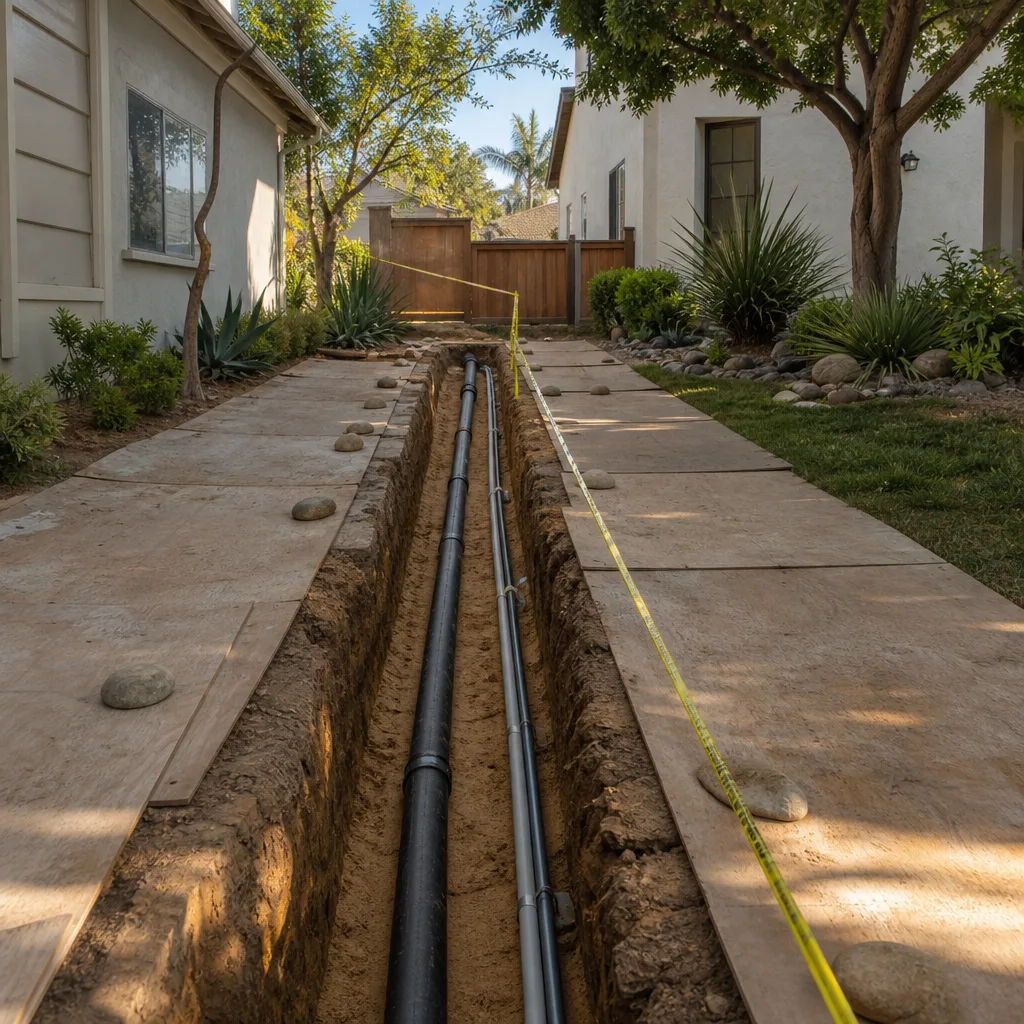
Here’s what Dvele site prep and utilities work actually costs in Long Beach, with the parts and labor separated so you know exactly where the money goes.
- Main water tie-in repair (leaking transition fitting or pressure regulator): $340 to $780 installed, including the new fitting or regulator, trench access if needed, and backfill.
- Sewer lateral repair at or near the foundation: $1,400 to $3,200 depending on depth, root intrusion, and whether we’re patching one joint or replacing a full section of ABS. Long Beach soil is sandy in places and clay-heavy in others, and clay means more trench shoring time.
- Electrical disconnect or feeder replacement: $900 to $2,600 for a 100 to 200 amp exterior disconnect, new feeder of correct gauge, weather-sealed connections, and torque verification at every lug. We re-check torque with a calibrated tool, not a “feels tight” guess.
- Utility trench repair with settling correction: $2,500 to $5,900 when the pad or module footing has compacted unevenly and the trench runs need re-bedding in compacted lifts.
Every job receives a written price before any work starts, a 365-Day Done Right Promise on the repair, and a free second visit if any covered repair fails within the year. You’ll get a digital invoice you can pay by link, before-and-after photos of the repair, and a written guarantee on the work. We don’t do change orders after the fact, and we never leave a homeowner guessing what the final bill will be.
DIY or Call Us?
There’s a line where DIY makes sense and a line where it doesn’t, and with Dvele site prep and utilities, that line is drawn at anything involving live electrical, gas, or a pressurized water line inside a wall or below grade. A homeowner can safely check for visible corrosion at the chase panel, note which fixtures lose pressure together, and mark wet spots in the yard. That information helps us quote the job faster. But opening a live 100-amp disconnect, cutting into a pressurized PEX run, or digging into a trench that may contain electrical conduit carries real risk. One bad cut into a live feeder or one wrong solvent weld on a sewer line can turn a $400 repair into a $4,000 emergency, and it can hurt someone in the process. We’d rather you call us and let a background-checked, uniformed technician handle it. Call (562) 362-3885, and we’ll walk through what you’re seeing and put a written price in your hands before any work begins.
FAQs
Site-prep components in Long Beach’s coastal environment typically last 10 to 20 years depending on the specific part; water tie-in fittings and pressure regulators generally need replacement at the 8 to 12 year mark due to the combination of mineral content in municipal water and marine air corrosion, while properly bedded ABS sewer laterals can go 30-plus years if the trench was backfilled correctly. Exterior electrical connections last longest when the installer used dielectric grease and sealed enclosures, which is why we verify both on every Dvele repair. Call (562) 362-3885 and we’ll inspect your specific setup and tell you what’s aging out first.
Some components, like a loose compression fitting or a corroded lug, can be cleaned, re-torqued, or re-sealed rather than replaced, but pressure-bearing water fittings and any electrical connection showing green or white corrosion should be replaced rather than patched. We always tell you the repair-versus-replace tradeoff in writing, with the cost of each option, so you can decide with the full picture and a firm quote. Call (562) 362-3885 for an honest read on your specific part.
Most single-component repairs are finished in one visit lasting 4 to 8 hours, including trench access, the actual repair, backfill, and cleanup; full sewer lateral replacements or trench re-bedding can take two days when the soil conditions or the depth demand it. You’ll get a written schedule when you get your written price, and we stick to it. Call (562) 362-3885 for a time estimate specific to your repair.
Yes, we keep common failure items stocked on our Long Beach service vehicles, including PEX-A transition fittings, 2-inch ABS couplings and sweeps, pressure regulator rebuild kits, weather-sealed electrical disconnects, and dielectric unions. If your repair needs something we don’t carry on board, our suppliers in the region run same-day or next-morning delivery on standard commercial items like Eaton disconnects and Uponor fittings. Call (562) 362-3885 with your part number or photo, and we’ll confirm availability before we arrive.
Written by Troy Eastman, Owner & Lead Builder, Benson ADU Long Beach at Benson ADU Long Beach, serving Long Beach and nearby areas.