James Hardie New Detached ADU: The Long Beach Owner’s Guide
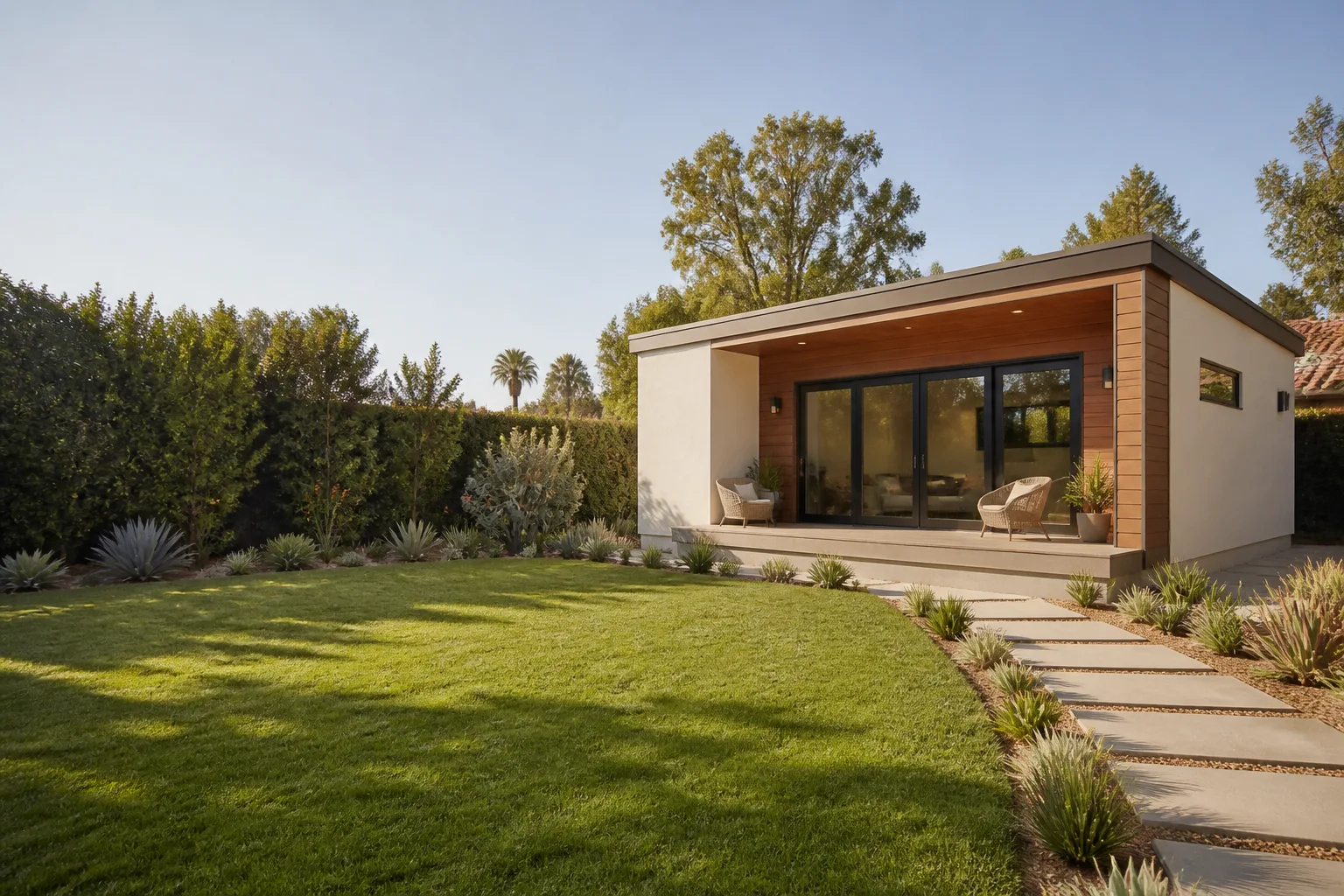
A new detached ADU clad in James Hardie siding in Long Beach typically runs $285,000 to $420,000 fully permitted and built, with the Hardie cladding and trim package accounting for roughly $18,000 to $32,000 of that total. We stock James Hardie plank, panel, and trim inventory for new detached ADU builds and can typically start a Hardie-clad detached unit within 4 to 6 weeks of permit approval. Most owners don’t call us because a single siding board failed. They call because they saw water staining at a butt joint, found a cracked corner trim piece after a windstorm, or realized their original contractor used the wrong fastener pattern and now boards are warping in the salt air off Alamitos Bay.
Here’s the thing about James Hardie on a detached ADU: the product is only as good as the installation behind it. We’ve torn into ADUs in Long Beach where the Hardie looked fine from the curb but the flashing underneath was wrong, and the wall cavity was quietly rotting. If you’re planning a new detached ADU or your existing one is showing signs of cladding failure, this page covers what you need to know before you spend another dollar.
Which James Hardie Models This Applies To
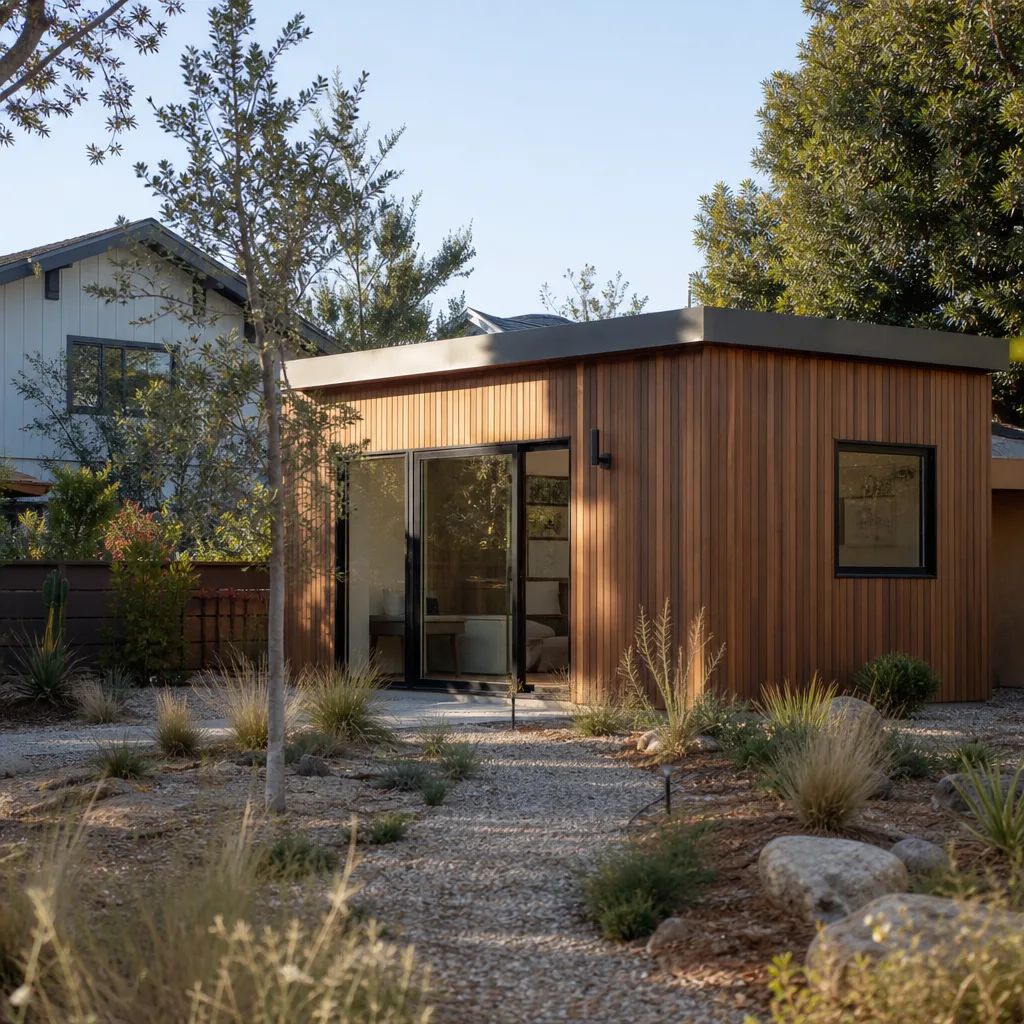
For new detached ADUs in Long Beach, we work primarily with three James Hardie product lines: HardiePlank lap siding (5/16″ thickness, available in 4″, 5.25″, 6.25″, 7.25″, and 8.25″ exposures), HardiePanel vertical siding (4×8, 4×9, and 4×10 sheets), and HardieTrim boards (4/4 and 5/4 thickness in smooth or woodgrain finish). The HardiePlank lap siding is the most common choice for detached ADUs because it matches the architectural language of Long Beach’s older craftsman and Spanish-style homes while giving you a product that termites won’t touch and that holds paint longer than wood.
Here’s a compatibility gotcha most owners don’t learn until it’s too late: James Hardie products require specific fasteners. The company mandates corrosion-resistant nails or screws, and in coastal zones like Long Beach (within 3,000 feet of the ocean), that means stainless steel, not just hot-dipped galvanized. We’ve seen ADUs where a contractor used standard electro-galvanized nails two blocks from the beach, and within three years the fasteners were rusting through the paint. When we bid a Hardie-clad detached ADU, we specify fastener type in writing. No ambiguity, no “we’ll see what the supplier has.”
If you’re repairing an existing Hardie-clad ADU, the fast way to identify what you have is to pull a piece of trim or look at the cut edge. HardiePlank has a distinct fiber-cement core that looks like compressed cardboard with a slightly sandy texture. The color of the primed boards is a light beige or tan. If your boards are unpainted gray, that’s raw Hardie and it should have been painted within 180 days of installation. If you’re not sure what you’re looking at, take a photo and send it our way. Troy Eastman, our owner, can usually identify the product line from a picture faster than most people can find their property line.
Signs Your James Hardie New Detached ADU Is Failing
- Wavy or buckling siding at the bottom course. This is almost always either improper ground clearance (Hardie requires 6″ minimum from grade) or missing kickout flashing where a roof or deck meets the wall. We see this a lot on Long Beach ADUs built tight to the rear setback where water has nowhere to drain.
- Rust bleeding through the paint around nail heads. The wrong fastener was used. In Long Beach’s coastal air, electro-galvanized nails rust fast, and once they start, the stain spreads. The fix is pulling the affected boards, replacing fasteners with stainless, and repainting.
- Vertical cracks at outside corners. HardieTrim takes the most abuse on any ADU. If the original installer didn’t gap the trim properly at joints or used too few fasteners, thermal expansion will crack the pieces. We keep HardieTrim corner boards on the truck in the most common widths for exactly this reason.
- Paint failure on the bottom third of the wall. This usually points to splashback from hardscape or irrigation hitting the siding. Hardie is moisture-resistant, but constant water exposure will break down the primer coat. Long Beach’s morning marine layer doesn’t help. The fix often involves both a siding repair and a landscape adjustment.
- Gaps opening at butt joints. Hardie products expand and contract with temperature. If the installer didn’t leave the specified 1/8″ gap at joint intersections and use proper joint flashing, you’ll see gaps open and close with the seasons. Water gets in, and the process accelerates. Long Beach swings from damp 50-degree mornings to 90-degree inland heat, and that thermal cycling is brutal on improperly installed siding.
Replacement Cost & What’s Included
For an existing detached ADU in Long Beach needing Hardie cladding repair, here’s what you’re looking at:
- Single board replacement (HardiePlank lap siding): $180 to $340 installed, including color-matched paint and proper stainless fasteners.
- Corner trim replacement (HardieTrim 4/4): $220 to $400 per corner, depending on height and access.
- Full re-side of a 600 sq ft detached ADU: $18,000 to $32,000, including tear-off of old siding, inspection of sheathing and moisture barrier, new Hardie product, flashing, fastener upgrade to stainless where required, and full paint.
- New detached ADU built with James Hardie cladding: $285,000 to $420,000 all-in, which covers design, permits, foundation, framing, mechanical, Hardie cladding and trim, roofing, and interior finishes.
Every quote from Benson ADU Long Beach is a written price before any work starts. No change orders because we “discovered” something. No vague allowances. The price on paper is the price on the invoice. Our 365-Day Done Right Promise covers the Hardie installation and any repair work we perform for a full year. If a board we installed fails within 365 days, we come back and fix it. In writing, stamped on your project file.
DIY or Call Us?
Fiber cement siding is not a friendly DIY product. It’s not dangerous like a garage spring under tension, but it is unforgiving. HardiePlank is heavy, it chips if you cut it wrong, and the dust from cutting contains silica, which is a serious respiratory hazard. You need proper scoring tools or shears, you need to know the right fastener schedule (12″ on center for lap siding, 16″ for panels), and you need to respect the expansion gap rules or your repair will fail again in six months.
What you can safely do yourself: photograph the damage, note where the water is getting in, and check whether nearby irrigation is soaking the wall. What you shouldn’t do: attempt to replace more than one or two boards without understanding flashing integration. We’ve repaired DIY jobs where a homeowner nailed Hardie directly over rotted sheathing and called it done. Six months later, the wall was softer than the siding. If you’re in Long Beach and the damage is beyond a single board, call (562) 362-3885. We’ll give you a written price and tell you honestly whether it’s a repair or a re-side.
FAQs
James Hardie products carry a 30-year limited, non-prorated warranty, and the siding itself will typically last 40 to 50 years in Long Beach’s coastal climate if installed correctly with proper fasteners, flashing, and paint maintenance. The weak points are the fasteners and flashing, not the Hardie board itself. With stainless fasteners and proper flashing, expect the full lifespan. With the wrong nails, expect problems inside a decade.
Yes, a single cracked or warped board can be removed and replaced without re-doing the whole wall, as long as the water hasn’t migrated to the sheathing underneath. If the board behind the siding shows staining or softness, the repair becomes a bigger job because you’re now addressing structural damage. Call (562) 362-3885 and we’ll tell you which situation you’re in, with photos and a written price either way.
A single board replacement takes 2 to 3 hours on site. A full re-side of a detached ADU typically takes 5 to 8 working days, including tear-off, sheathing inspection, new moisture barrier, Hardie installation, flashing, and painting. A new detached ADU built from the ground up with Hardie cladding runs 4 to 6 months from design to final inspection, with permits being the biggest variable.
We stock HardiePlank lap siding in the most common exposures, HardiePanel sheets, and HardieTrim in standard widths at our Long Beach yard. We also have accounts with local James Hardie suppliers for same-week delivery of less common profiles and colors. If you’re working with Abodu, Cover, or Dvele panels on your ADU, we can source those components too. You never have to play parts-runner on your own project.
Get a Written Price for Your Long Beach ADU Project
Whether you’re repairing a failing Hardie wall or planning a new detached ADU from the ground up, the process starts the same way: you call (562) 362-3885, we talk through what you’re seeing, and we put a written price in front of you before anything gets signed. Every promise in writing before a single shovel turns. That’s how Troy Eastman and our crew at Benson ADU Long Beach have been doing it, and we’re not changing now.
Written by Troy Eastman, Owner & Lead Builder, Benson ADU Long Beach at Benson ADU Long Beach, serving Long Beach and nearby areas.