James Hardie Site Prep & Utilities: The Long Beach Owner’s Guide
We regularly stock and install James Hardie-compatible site prep materials and utility connection components across Long Beach, with most complete site utility packages running $1,800 to $4,600 installed depending on trench depth, panel routing, and whether existing stubs are salvageable. Before Hardie siding or trim ever touches a wall, the site underneath has to be right, and that’s where we see most owners discover a problem: a downspout that drains into the foundation, an old gas line stub that never got capped properly, or electrical conduit that wasn’t rated for direct burial and has been sitting in Long Beach’s marine air for fifteen years. Usually, someone notices water pooling near a kneewall, or a breaker trips and the circuit turns out to be a shallow-buried splice the previous owner never mentioned. This is the page that explains what’s under your James Hardie cladding and what it costs to make it right.
Which James Hardie Models This Applies To
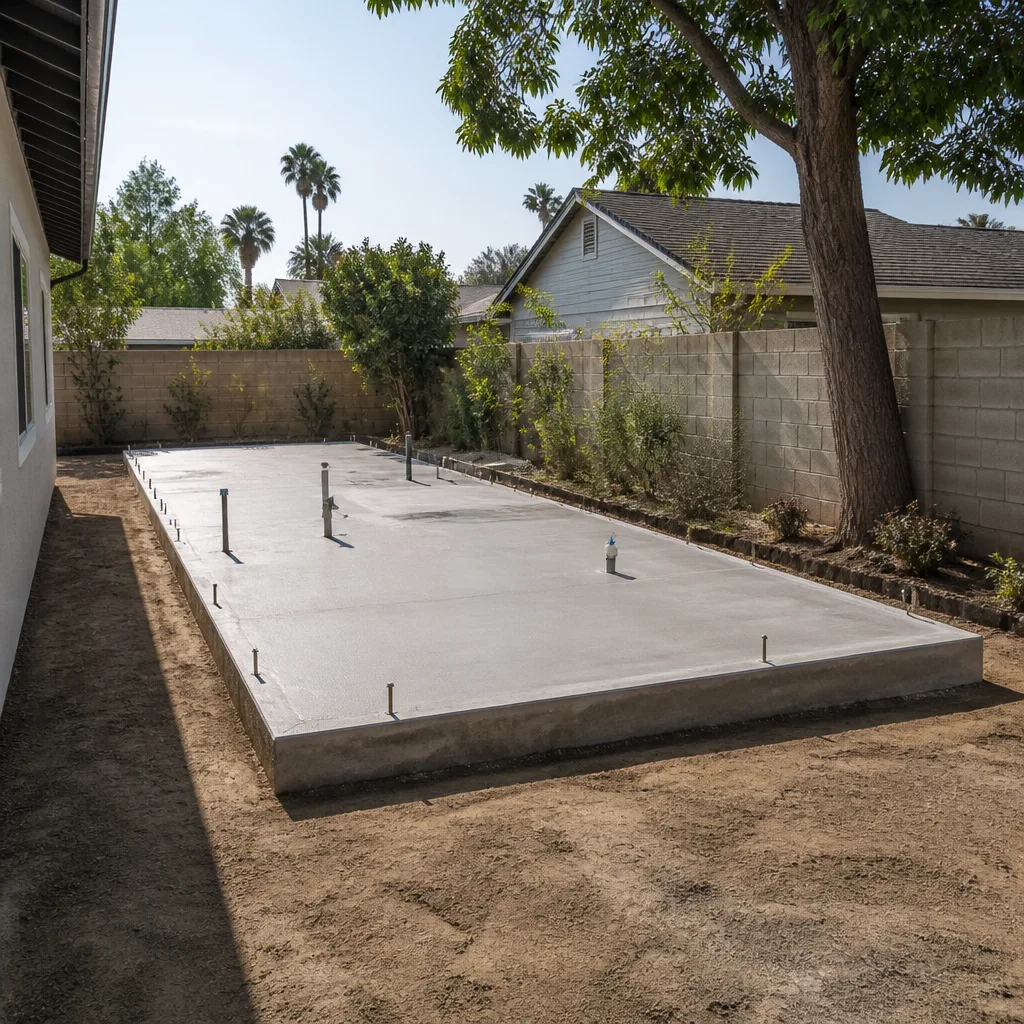
Site prep and utility work isn’t model-specific to James Hardie siding the way a replacement board is. Your HardiePlank lap siding, HardiePanel vertical siding, HardieShingle, and HardieTrim boards all hang on the same framing, which means the prep underneath applies across the full product line. What changes is how their installation details interact with grade, drainage, and existing utility runs. For example, James Hardie’s installation spec calls for a minimum 6-inch clearance between siding and finished grade in most residential applications. Long Beach lots, especially in neighborhoods like Wrigley and Bixby Knolls with older foundations and minimal crawl space, often sit lower to grade than that, which means we’re frequently trenching, regrading, and adding drainage before cladding ever begins.
If you’re trying to match existing Hardie product, check the back edge of a removed board or the nailing flange: HardiePlank boards are labeled with the specific code (HZ10 for the standard product, HZ5 for environments requiring higher wind resistance). We can also identify board profiles by thickness, because HardiePlank 5/16-inch lap siding and 3/8-inch Artisan lap are different products, and the install details for flashing and utility clearances change accordingly. One compatibility gotcha we see often in Long Beach: homeowners who added a deck or patio years after the original Hardie install, and now their siding sits below-grade on one side because the new concrete changed the drainage plane. That’s not a siding failure, it’s a site prep failure, and it gets fixed by reestablishing grade clearance, not by swapping out boards.
Signs Your James Hardie Site Prep & Utilities Is Failing
- Water wicking up from the bottom edge of siding. When your Hardie boards sit too close to soil, moisture moves upward through capillary action. You’ll see the bottom of the boards stay damp, and eventually the paint fails in a horizontal band right at grade level. That’s a clearance issue, and adding more paint won’t stop it.
- Downspouts that empty directly against the foundation. Every Long Beach downpour sends a river of water to wherever your downspouts point. If they dump water within three feet of a foundation wall, you’re slowly undermining whatever is underneath. We reroute downspout extensions into solid pipe that carries water to daylight or a dry well.
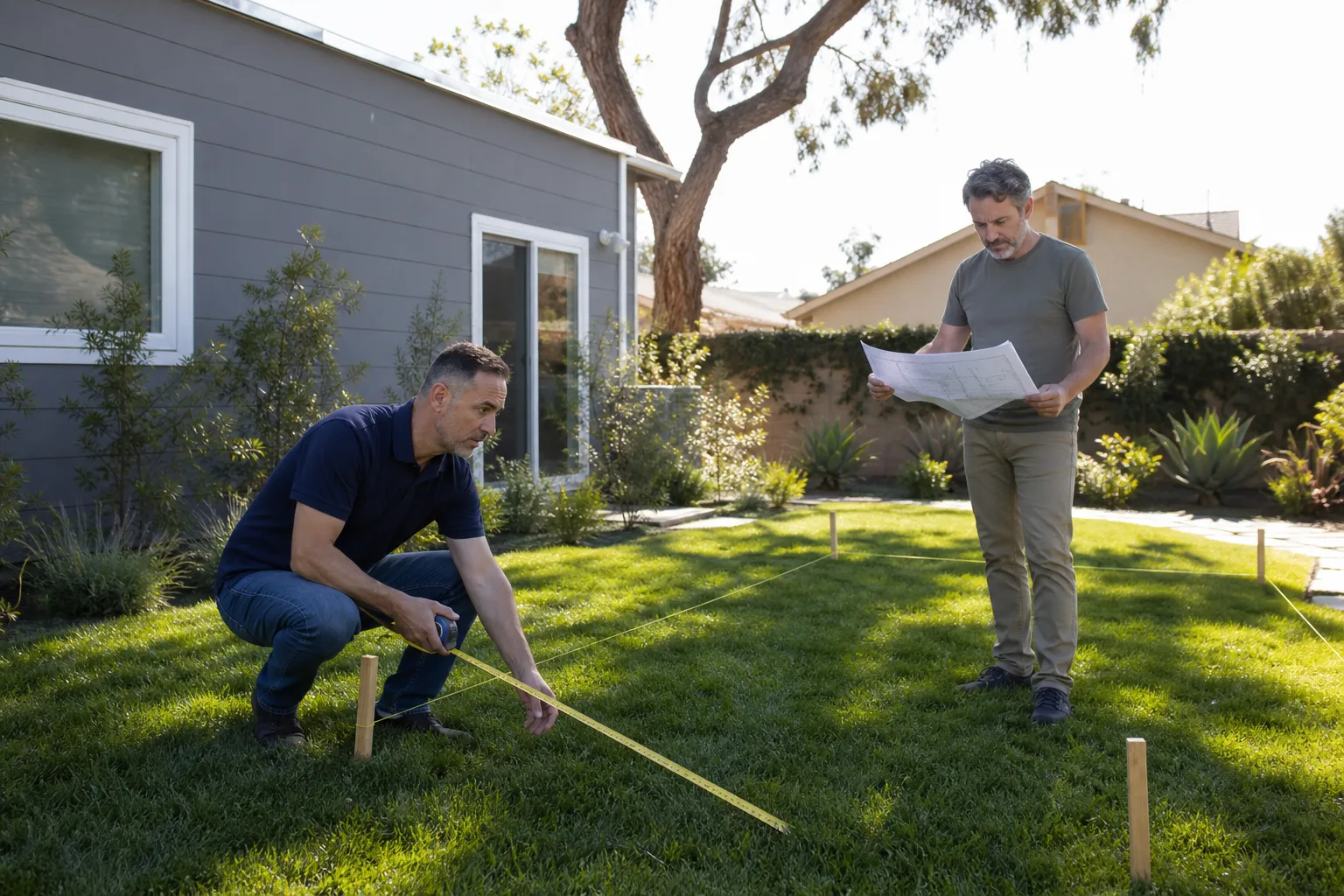
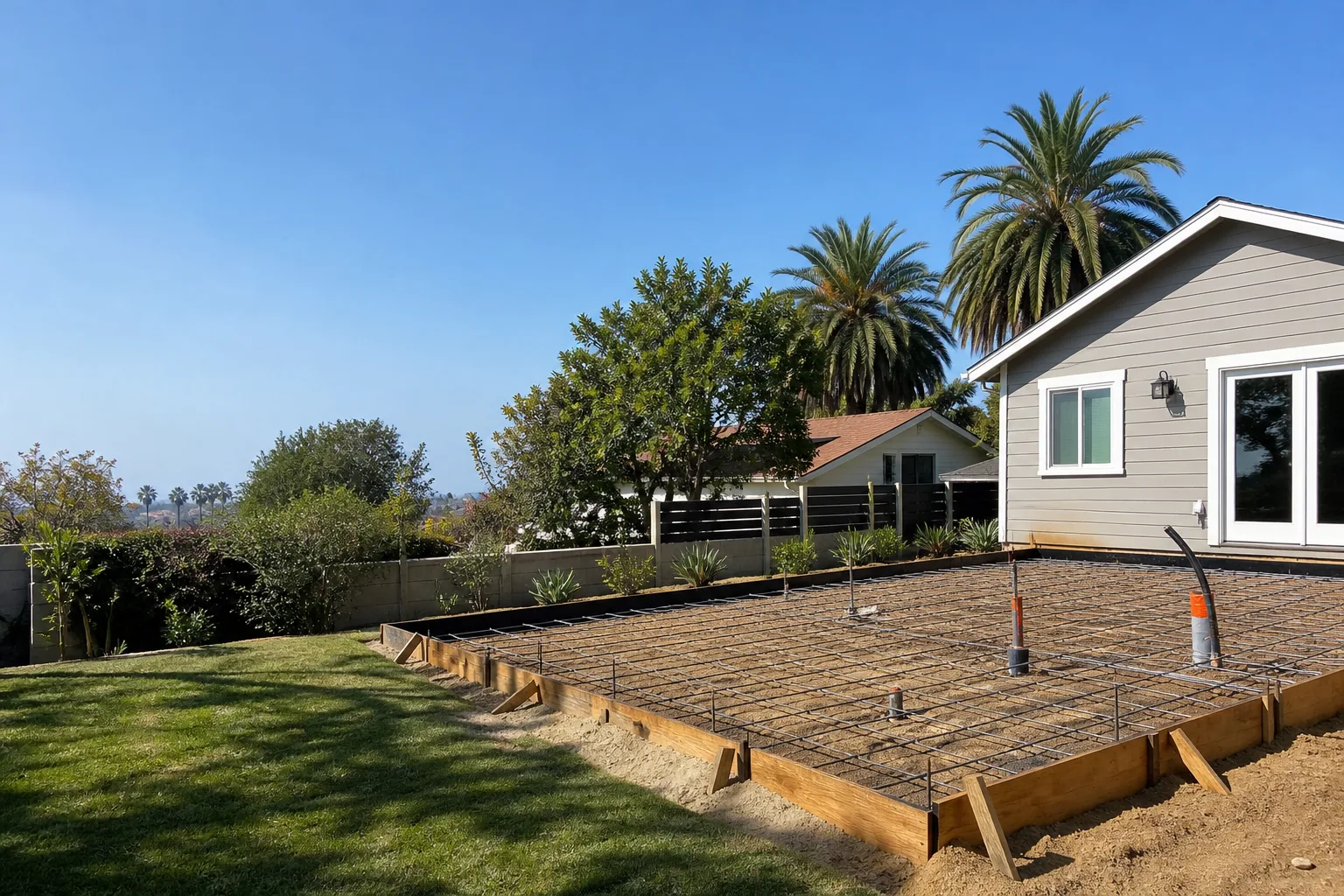
- Exposed or shallow utilities near a planned ADU or addition pad. If you’re putting up a kit from Abodu, Cover, or Dvele, the site prep has to account for every gas, electric, water, and sewer line crossing the build area. Older Long Beach houses sometimes have gas lines buried less than 12 inches deep, and a backhoe or even a post-hole digger can find one the hard way. We always pull utility locate records before any excavation, and we verify what we find against what’s marked.
- Standing water in a crawl space or puddle that never dries outside. Long Beach’s clay-heavy soils drain slowly, and if your lot was graded decades ago without accounting for a neighboring addition or a new fence line, water can start collecting where it never used to. Site prep means re-grading enough that water moves away from the structure, not toward it.
- Rotted rim joists or sill plates where the house meets the site. This is the expensive warning sign. If you’re seeing brown, crumbly wood where the floor framing sits on the foundation, water has been getting in for a long time. By the time you see it from outside, the repair usually involves temporary shoring, removing the damaged section, and installing new pressure-treated material before re-cladding with Hardie. The cladding didn’t fail; the site did.
Replacement Cost & What’s Included
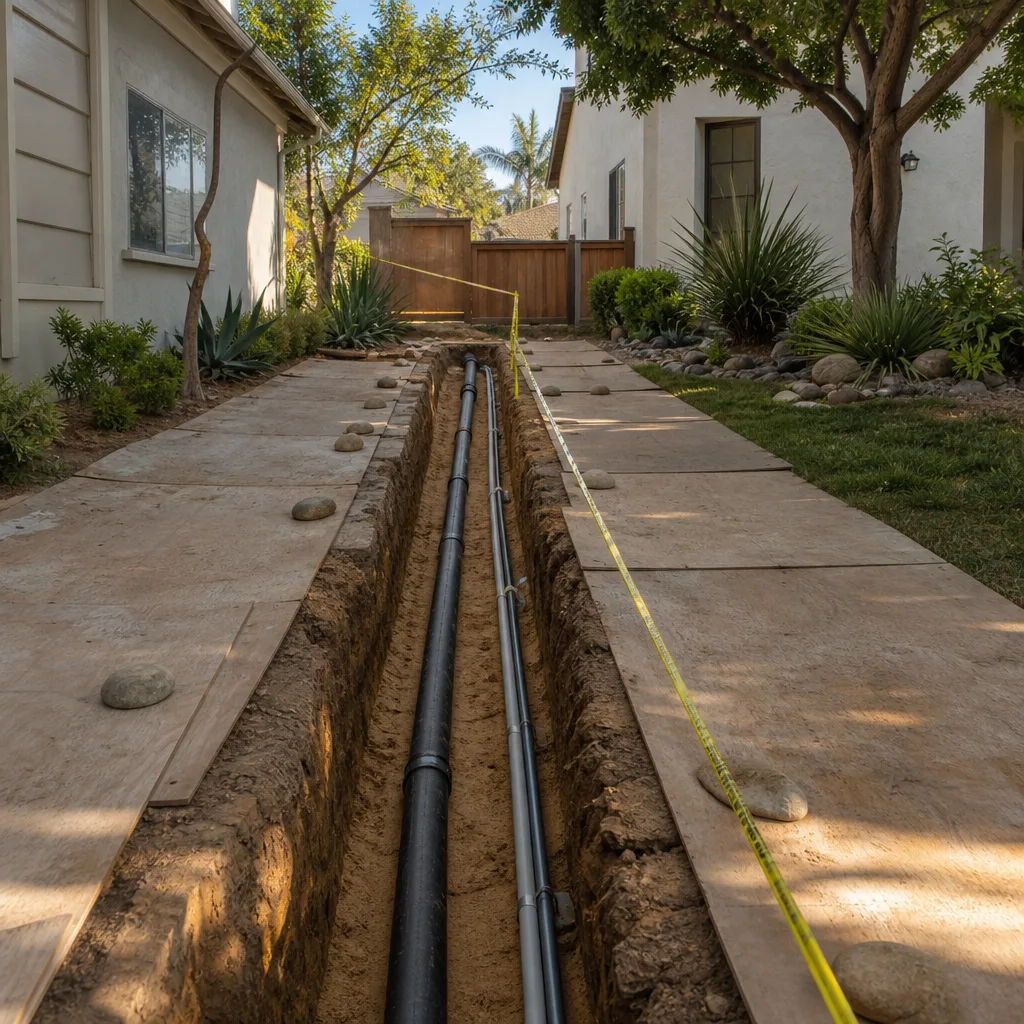
For Long Beach homeowners, a full site prep and utility package typically runs $1,800 to $4,600 installed. The spread depends on how far utilities need to move, how deep the trench has to go, and whether we’re dealing with a simple re-grade or something structural. A straightforward downspout reroute with a few feet of solid pipe and a pop-up emitter runs $400 to $800. Electrical conduit replacement for a 120V landscape or exterior circuit runs $600 to $1,200 depending on length and whether the old conduit crumbles as we pull it. Moving or capping an abandoned gas line is $800 to $1,800 when the line is accessible and the meter is close; if we have to coordinate with the utility provider, that changes the schedule and the price, and we’ll say so before anything gets signed.
Every quote we give in Long Beach includes a written line-item breakdown: materials, labor hours, disposal, and permit costs if required. No change order gets added because we didn’t think far enough ahead. That’s the point of The Relay Visibility Guarantee: a written price before work starts, and a 365-Day Done Right Promise if whatever we installed doesn’t hold up. We pull permits when the scope requires them and we don’t pass inspection surprises downstream.
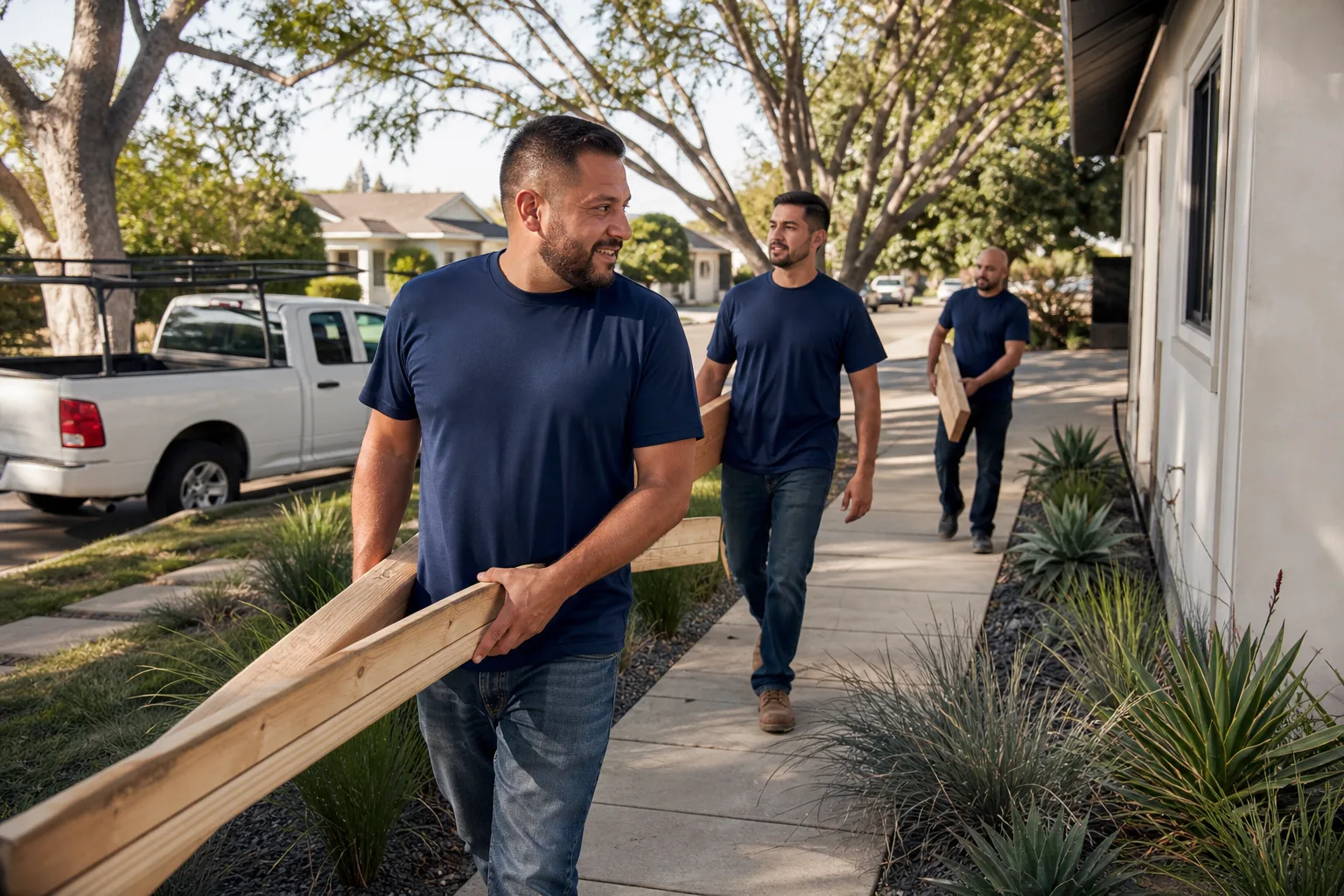
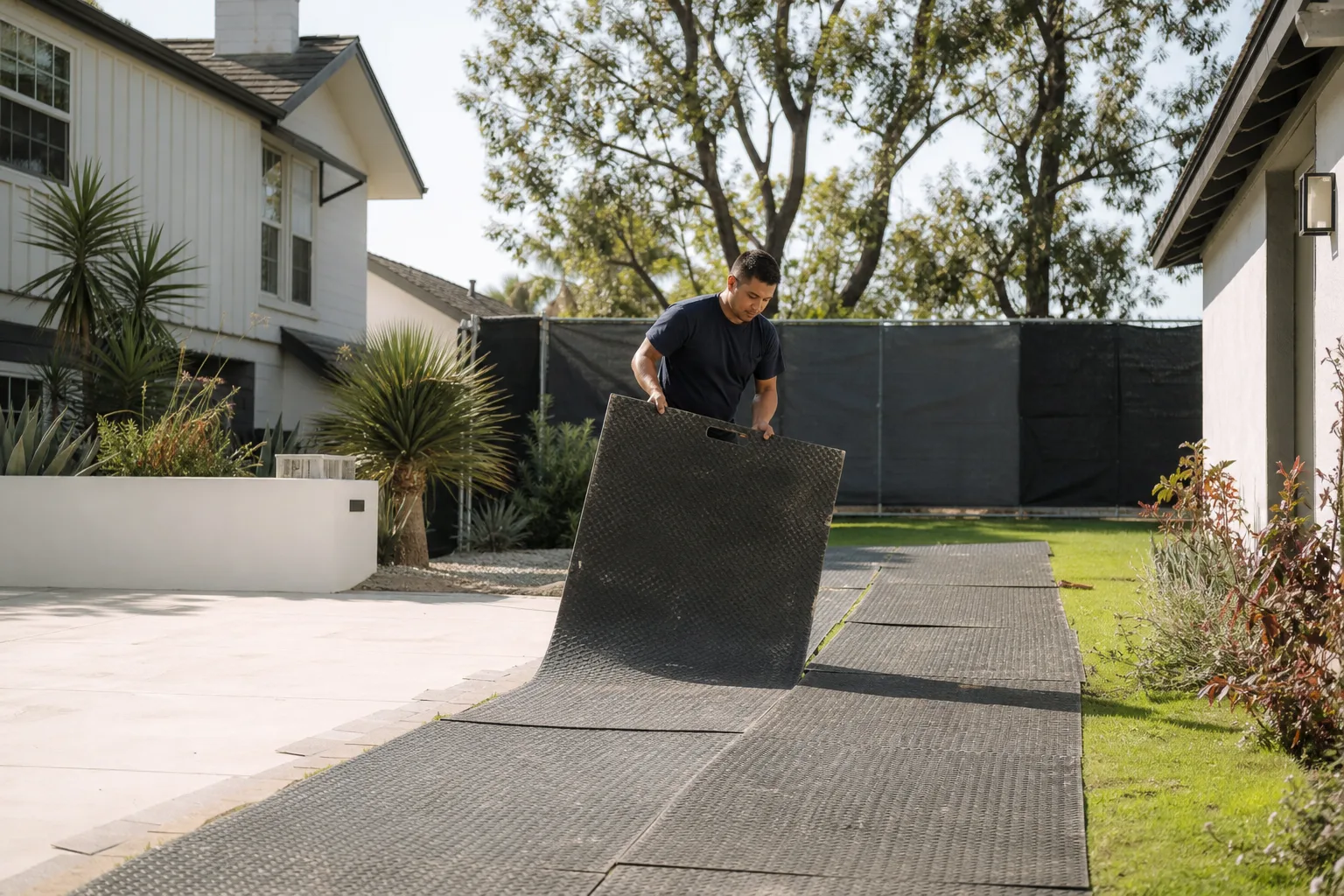
Because we build ADUs with top prefab brands like Abodu, Cover, Dvele, Mighty Buildings, Boxabl, and Plant Prefab, plus Tuff Shed for smaller applications, we’re already doing this kind of site work at the front end of a build. When a homeowner calls us specifically for site prep, we’re not scrambling to figure out how utilities should sit on a residential lot; we do it every week.
DIY or Call Us?
There’s a real split here depending on what failed. Extending a downspout away from the house is a weekend fix most homeowners can handle: buy an extension, angle it downhill, and make sure the water lands at least four feet from the foundation. Checking that your soil is grading away from the house is also free to inspect and worth doing on a dry Saturday. What you should not do is dig near gas lines, electrical conduit, or water mains without a locate ticket and someone who knows what they’re looking at. A punctured gas line is a life-threatening emergency, not a learning opportunity, and a buried electrical splice that’s been corroding in salt air can be fully energized when you put a shovel into it. If you’re not certain what’s underground, stop and call us at (562) 362-3885. We’ll locate it, assess it, and give you the price before any dirt moves.
FAQs
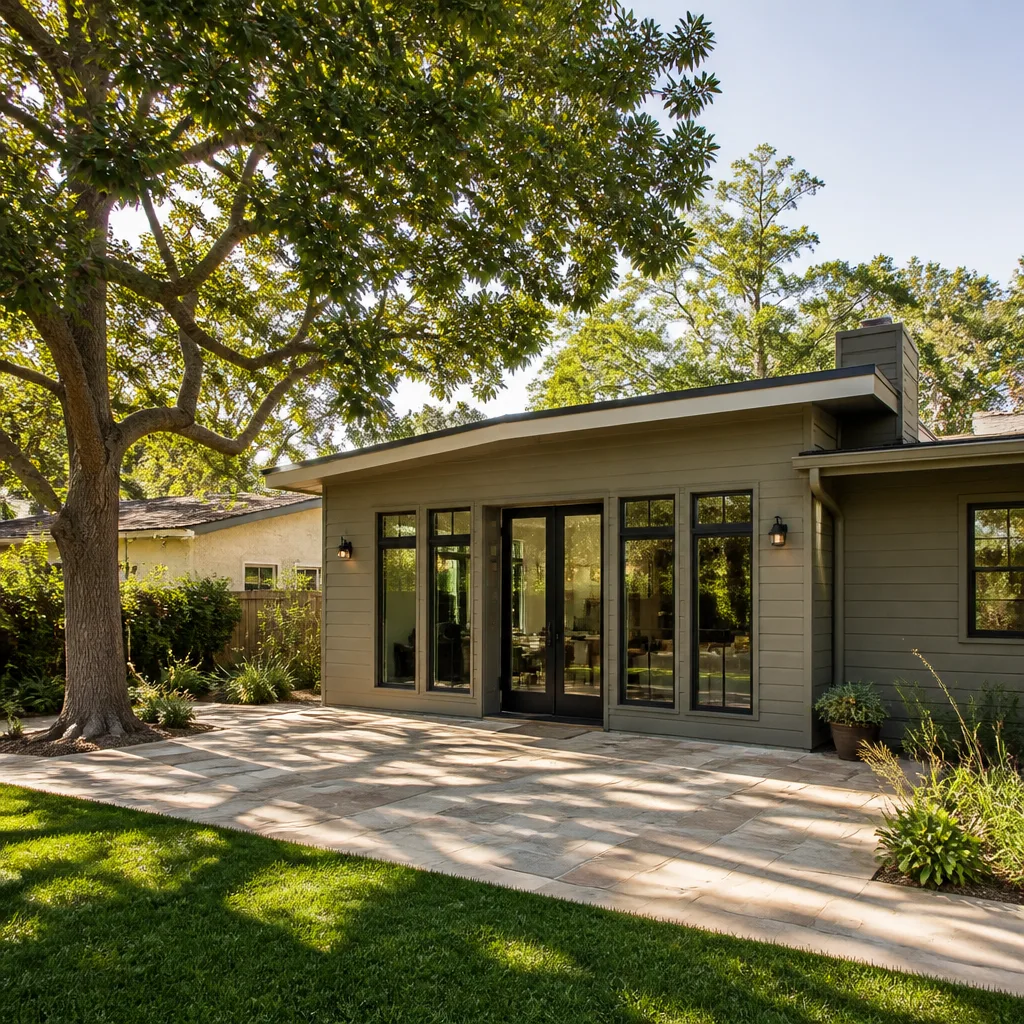
A proper grade, functioning drainage, and correctly installed utilities should serve the full lifespan of the James Hardie cladding above, which is routinely 30 to 50 years in Long Beach’s climate, provided the clearance between siding and grade is maintained. What usually shortens that lifespan isn’t the Hardie product; it’s a change to the site like new landscaping beds, a patio pour, or a neighbor’s add-on directing water toward your foundation. If you’re dealing with a failed site prep, call (562) 362-3885 and we’ll tell you what’s really going on.
Most site prep work is repair work by nature: re-grading a small area, extending a downspout, capping an abandoned line, or adding drainage tile in a problem corner. A full replacement only makes sense when the substrate itself has failed, like a rim joist that’s crumbled beyond sistering. Our goal is never to demo more than the problem area, and your written quote will show exactly what we’re touching and what we’re leaving alone. Estimates are free, so call (562) 362-3885 and we’ll take a look.
A simple downspout reroute or minor re-grade is usually a half-day to one full day. A multi-utility scope, like moving an electrical panel feed and capping an old gas line while we’re trenching for drainage, runs two to four days on site, with another day or more if a utility provider has to be scheduled. We’ll give you the timeline in writing before work starts, because one of our promises is that you’ll always know when the crew arrives and what they’re doing that day.
We stock the common items on our trucks: solid PVC and corrugated drainage pipe, pop-up emitters, downspout extensions, conduit bodies, wire, and gas caps. For anything exotic, we source it through our suppliers and it typically lands within a few days. Tell us what you need and we’ll confirm same-week availability when we schedule. Call (562) 362-3885 to get that started.
Written by Troy Eastman, Owner & Lead Builder, Benson ADU Long Beach at Benson ADU Long Beach, serving Long Beach and nearby areas.