Abodu Room Addition Contractor in Long Beach: What to Know First
We’re an independent Abodu room addition contractor serving Long Beach, and the short answer is this: adding onto an existing Abodu structure is doable, but it’s not a bolt-on job. You’re either extending the roofline and tying into the existing panel system, or you’re building a connected addition that has to match the original module’s lines, flashing, and cladding. Budgets in Long Beach for Abodu additions typically run $180 to $320 per square foot depending on site conditions, and you should expect the project to take 8 to 16 weeks from permit to final inspection.
If you own an Abodu unit in Long Beach and you’re outgrowing it, this page tells you what actually happens when you add a room to one. Call (562) 362-3885 and we’ll walk you through it, or keep reading first.
How Abodu Products Fail – and How We Fix Them
Abodu builds a tight prefab shell, but the places where an addition ties in are exactly where problems show up. Here’s what we see on Long Beach Abodu units:
- Fascia and eave rot at the roofline tie-in. The original Abodu module ships with a clean, single-plane roof. When you cut into it for an addition, water wants to find the seam. We’ve seen fascia boards on Series One units in Long Beach start to swell within two wet winters if the original gutter line wasn’t re-sloped. We pull the old fascia, flash the transition with a Z-bar and peel-and-stick membrane, then reframe with primed cedar before re-hanging gutters.
- Panel joint separation at the marriage line. Abodu’s wall panels are precision-built, but Long Beach’s marine air and seasonal temperature swings cause expansion and contraction. On units older than five years, the caulk line where two panels meet can crack and let moisture wick into the sheathing. We don’t just recaulk; we verify the panel fasteners are still tight, replace any swollen sheathing, and then install a compressible backer rod before a fresh urethane seal.
- Threshold settling where the addition meets the original slab. This is the one we see most on Wrigley and Bixby Knolls lots with heavier clay soil. The original Abodu pier foundation moves slightly differently than a new poured footing. The floor transition starts to dip or crack. We handle it by drilling and pinning the new footing to the old slab with epoxy-set rebar, then leveling the threshold with a polymer shim system rather than just packing drypack that will crack again.
- Window and door flashing failures on Series Two units. Abodu’s larger models use more glazing, which means more penetrations. On Long Beach properties within a mile of the water, we see zinc flashing corrode faster than expected when it wasn’t isolated from the fiber-cement cladding with a proper barrier. We swap in copper or PVC-coated aluminum flashing and add a capillary break.
- HVAC duct runs that were sized for the original square footage. Abodu units ship with a mini-split or packaged unit sized for the module as built. Add 200 square feet of conditioned room, and the existing system can’t keep up. We perform a Manual J load calc before any addition gets framed, then either upgrade the condenser or add a dedicated ductless head for the new space. Skipping this step leaves you with a room that never quite cools in Long Beach summers.
Our Abodu Room Addition Contractor Process
Here’s exactly what happens when you hire us for an Abodu addition in Long Beach:
- 1
Call and talk to a person. You dial (562) 362-3885, a live human answers, and we schedule a site visit. No voicemail tag.
- 2
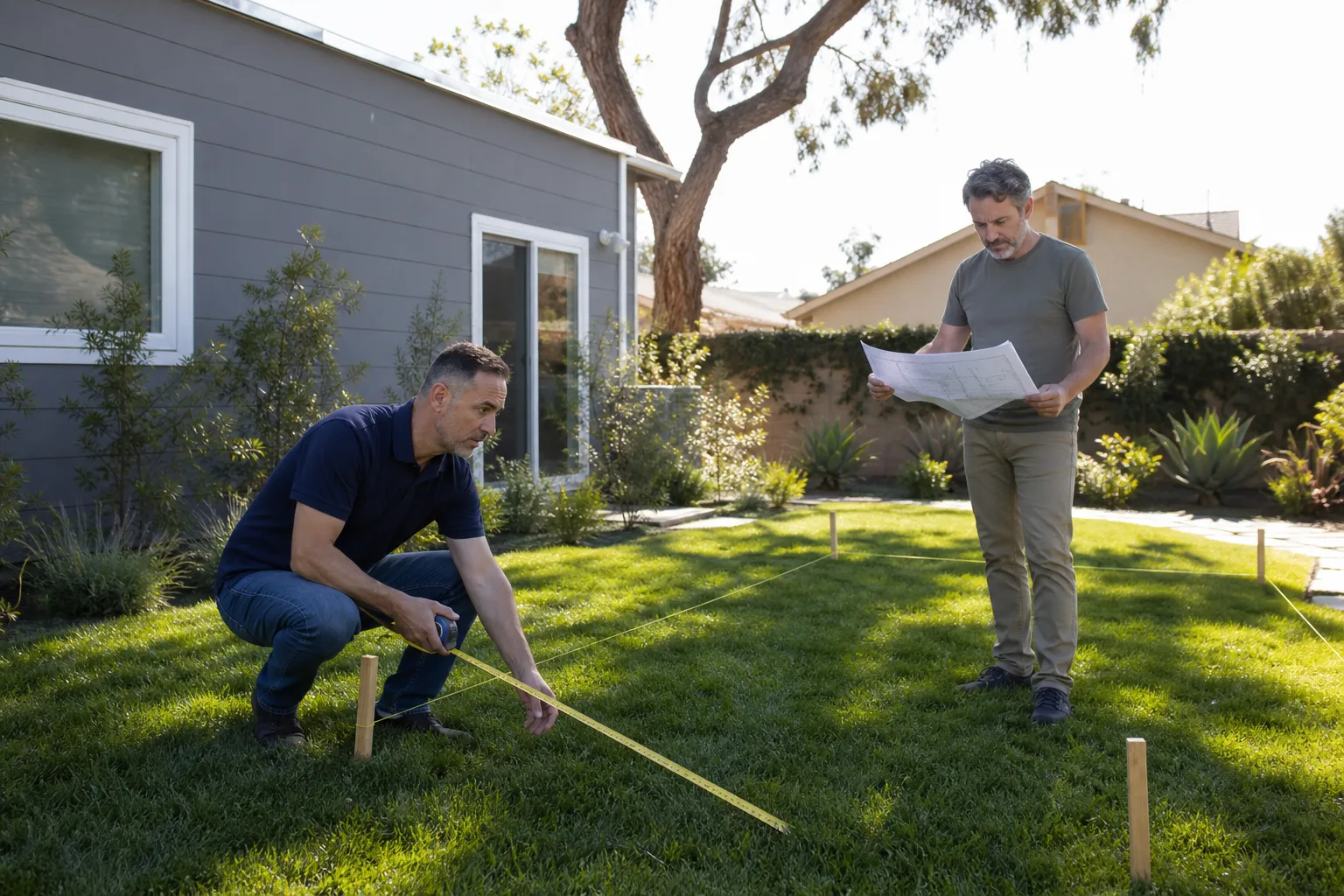
Site assessment and measurements. We walk the property, check the existing Abodu’s foundation type and panel condition, and take field measurements for setbacks, roof pitch, and tie-in points. Troy Eastman is usually the one on-site for this first visit, and he’ll explain what the city of Long Beach will and won’t allow before you spend a dime.
- 3
Written price before work starts. You get a line-item written estimate covering framing, roofing, electrical, drywall, paint, and the specific tie-in work your Abodu needs. That number does not change unless you change the scope.
- 4
Permitting and plans. We handle the building permit submittal to Long Beach Development Services, including structural calculations for the addition, the tie-in detail, and Title 24 energy compliance.
- 5
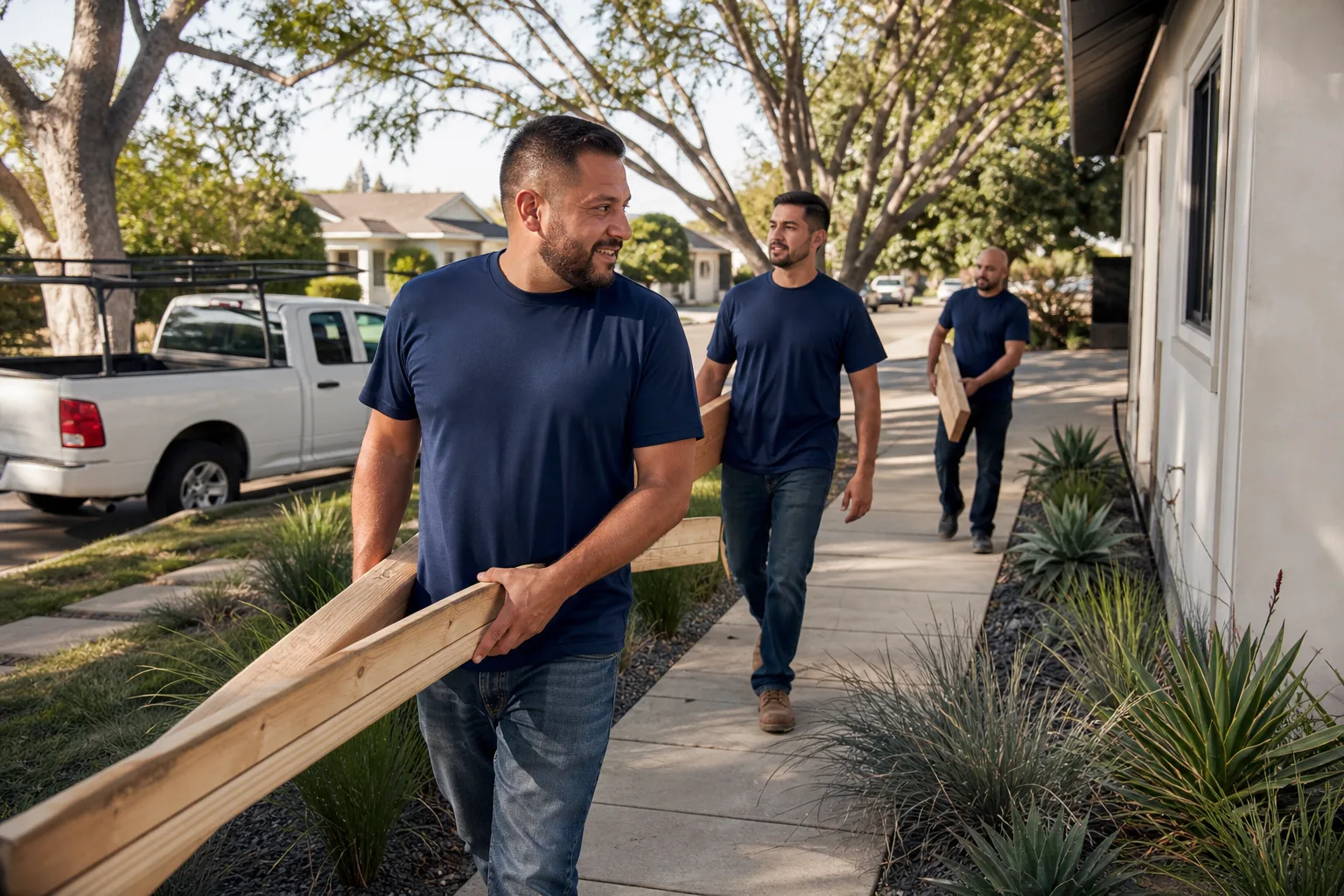
Framing, tie-in, and finish. Our crew does the work in uniform. You get real-time progress updates, including photos, through the Relay Visibility app. We flash every seam, match the cladding, and leave the site broom-clean.
- 6
Final walkthrough and the 365-Day Done Right Promise. We walk the addition with you before we call the job done. If anything isn’t right within a year, we come back and make it right. It’s written on the guarantee stamped on your project file.
What Abodu Room Addition Contractor Costs in Long Beach
Here’s honest money. For Abodu additions in Long Beach, expect:
- Simple bump-out (80 to 120 sq ft): $22,000 to $38,000. This is a single-story addition with minimal foundation work and a straight roofline tie-in.
- Full bedroom suite addition (200 to 300 sq ft): $45,000 to $85,000. Includes a new bathroom rough-in, dedicated HVAC, and more complex roof integration.
- Second-story addition over an Abodu unit: $90,000 and up. This requires structural reinforcement of the original module’s walls and a full re-roof, and it’s only viable on certain Abodu footprints.
What moves the price: soil condition on your lot, how close you are to the property line (setbacks get tight in neighborhoods like Alamitos Beach), and whether the original Abodu plumbing and electrical have spare capacity. We’ll give you a fixed written number before any work begins. Call (562) 362-3885 for a free estimate.
Why Long Beach Homeowners Call Benson ADU Long Beach for Abodu Work
Most contractors in Long Beach have never touched an Abodu. That matters because Abodu’s panelized construction doesn’t behave like stick-built framing, and a guy who’s only ever framed with 2x4s will guess wrong at the tie-in points. We’ve been doing additions on Abodu, Cover, and Dvele units across Long Beach for years, so we know where the weak spots are before we open up the wall.
We also put every promise in writing before a single shovel turns. You get a written price, a written guarantee, and the 365-Day Done Right Promise. Our techs are background-checked and uniformed. A live person answers the phone 24/7. And if you ever decide to add a second unit, we can pull from Abodu, Cover, Dvele, Boxabl, Plant Prefab, Mighty Buildings, or Tuff Shed so you’re never stuck with a single take-it-or-leave-it option.
FAQs
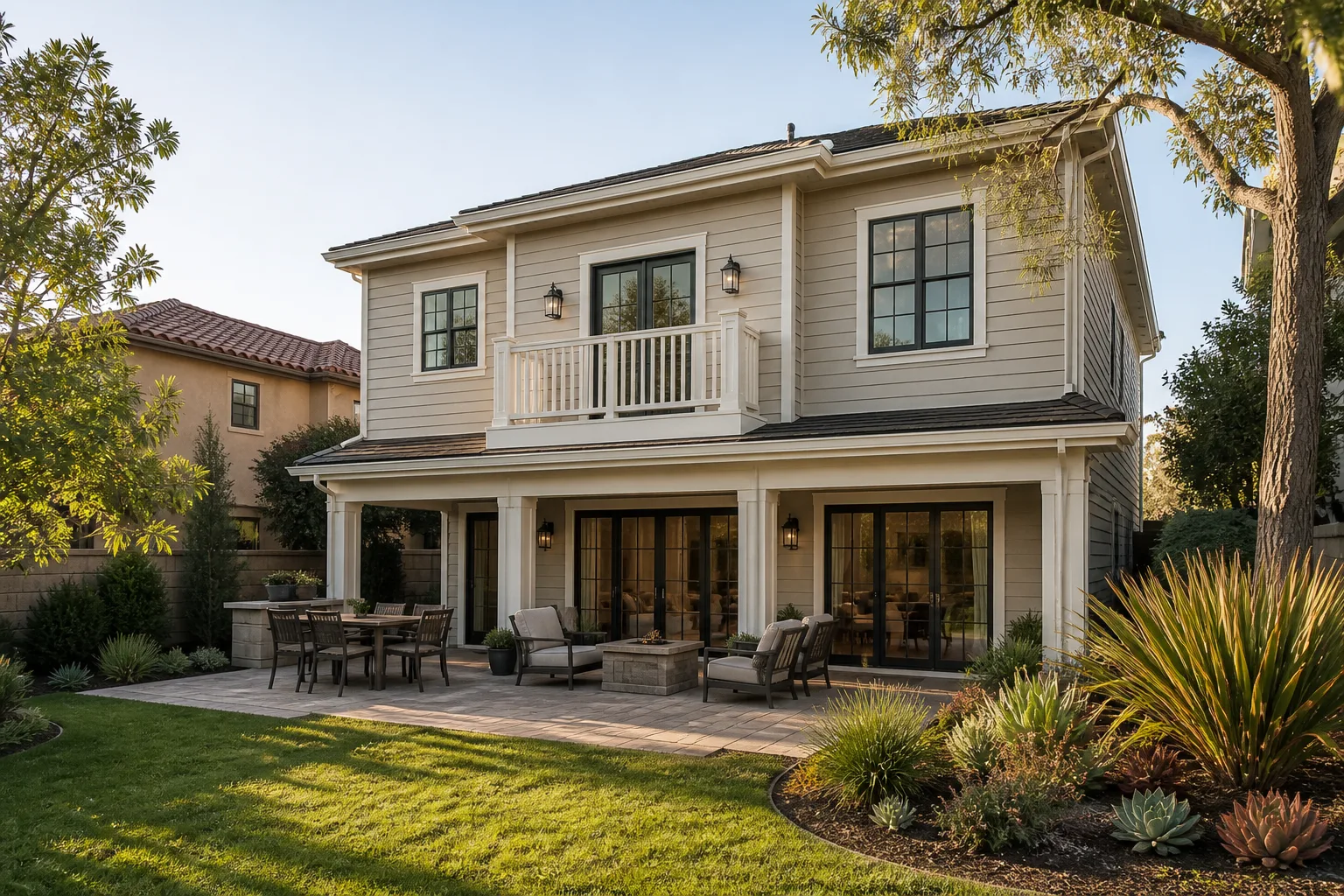
Yes. Abodu uses fiber-cement cladding in standard colorways that we can source directly, and our finishers feather the new paint at panel seams so the addition doesn’t look like an afterthought. For units where the original cladding has faded, we do a full repaint of the entire structure so everything blends.
It may, depending on the age of your unit and the scope of the addition. As an independent Abodu service provider, we don’t speak for the manufacturer, but we design our tie-in details to preserve the integrity of the original shell so any warranty claim you make later isn’t compromised by a bad connection. We’ll flag any specific risks in your written estimate. Call (562) 362-3885 and we’ll talk through your particular unit.
Plan on 8 to 16 weeks from the time we start drawings to the final inspection. Permitting through Long Beach typically takes 4 to 8 weeks depending on the complexity of the addition and whether you need coastal zone review. The construction phase for a standard single-story addition is usually 6 to 10 weeks.
Yes, and we do this more often than we’d like in Long Beach. The most common fix is re-flashing a leaking roof tie-in and leveling a floor transition that settled. We’ll assess the work, give you a written price to correct it, and then it falls under our 365-Day Done Right Promise once we’re finished.
Yes. Every addition we build goes through the City of Long Beach with full permits and inspections. Unpermitted additions are a liability when you sell and a headache when it comes time to refinance. We’ve never once told a Long Beach homeowner to skip the permit process, because the money you save today costs you triple when Discovery Bay comes knocking. Call (562) 362-3885 for a free estimate and we’ll start the paperwork.
Written by Troy Eastman, Owner & Lead Builder, Benson ADU Long Beach at Benson ADU Long Beach, serving Long Beach and nearby areas.