Cover Site Prep & Utilities: The Long Beach Owner’s Guide
Site prep and utilities for a Cover unit in Long Beach typically runs $18,000 to $45,000 installed, depending on what your lot actually needs: sewer and water line runs, electrical service upgrades, foundation pads, trenching, and grading. We stock the utility hardware and site-prep materials that Cover units require, and we can usually have a crew on your Long Beach property within a few days of your initial call. Most owners don’t think about site prep until it’s too late: the unit arrives, and suddenly someone has to figure out where the sewer line actually is, whether the electrical panel has capacity, and why the pad isn’t level.
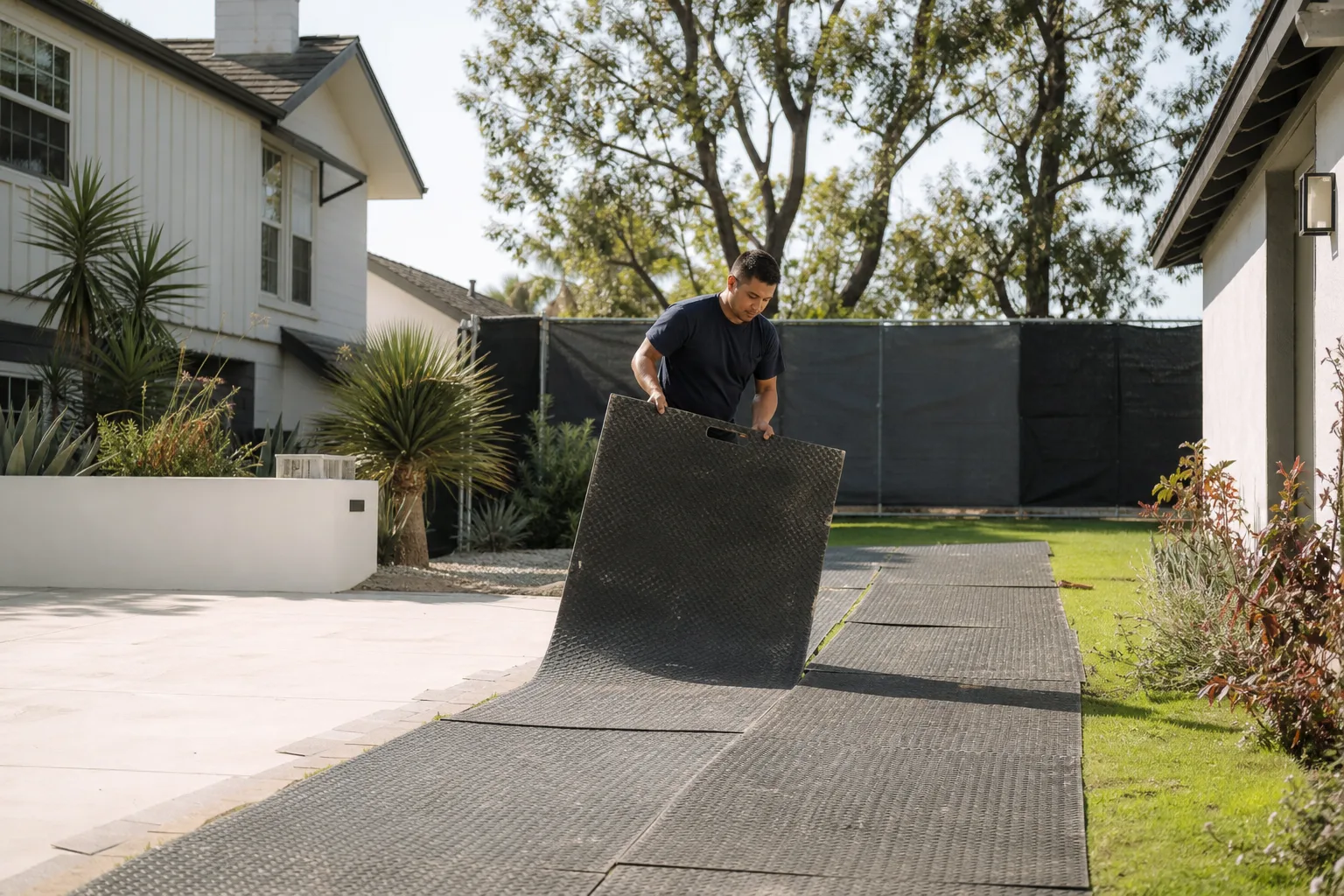
What fails on the site side isn’t the Cover unit itself. It’s almost always what’s underground or what was overlooked before delivery: undersized water lines, a sewer lateral that hasn’t been inspected since the 1970s, a panel that can’t handle the additional load, or a pad that settled because the soil compaction was done wrong. Troy Eastman has seen every one of these on Long Beach lots, including a Wrigley project where the sewer lateral ran through the neighbor’s easement and nobody caught it until the trench was already open. That’s the kind of thing a written site assessment catches before you’re standing there with a $200,000 unit and a hole in the ground.
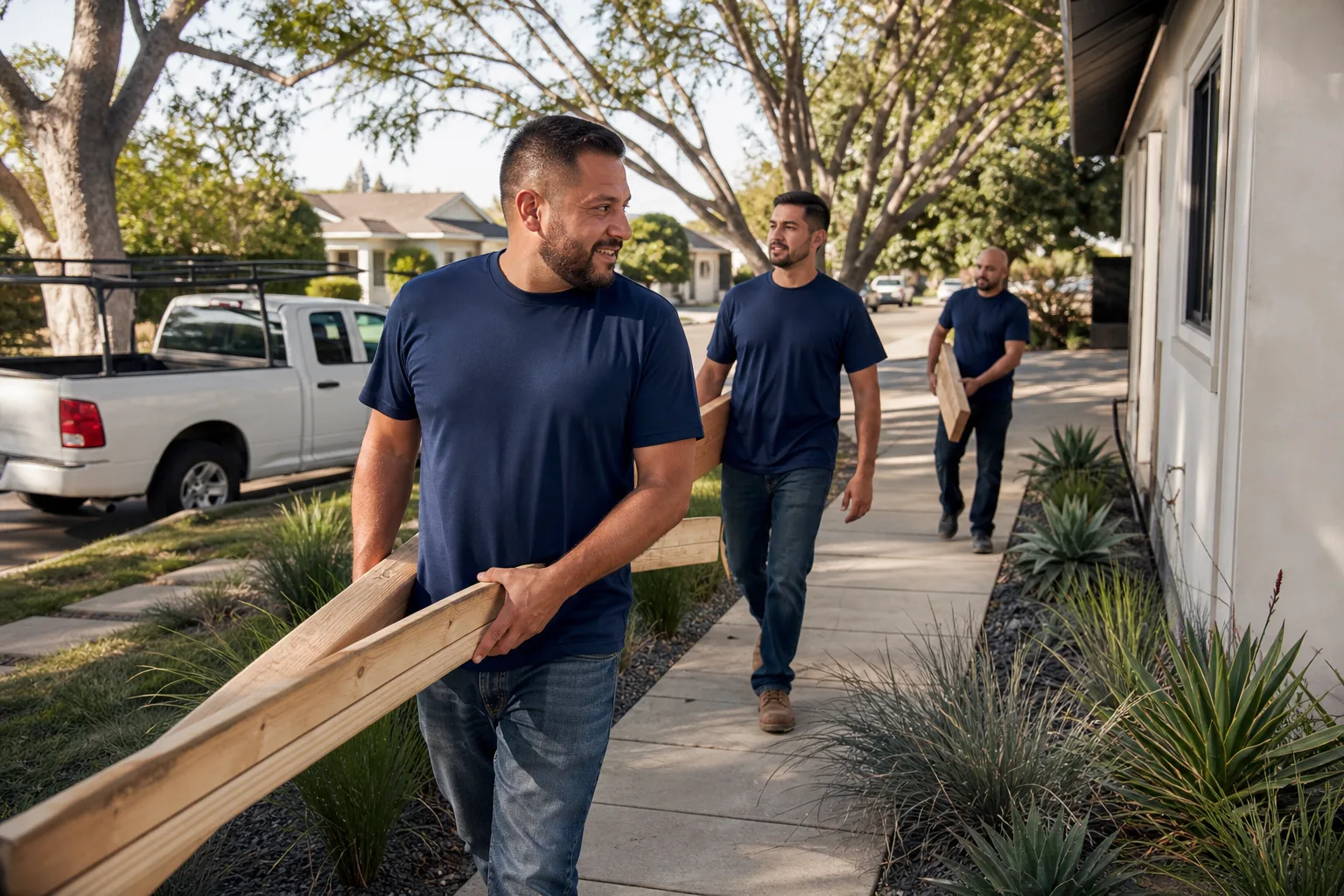
We’re an independent service provider, not affiliated with Cover. But we’ve prepped and connected enough Cover units in Long Beach that we know exactly what their utility specs call for, and we stock the common hardware so you’re not waiting on a backorder when the excavator is already on site.
Which Cover Models This Applies To
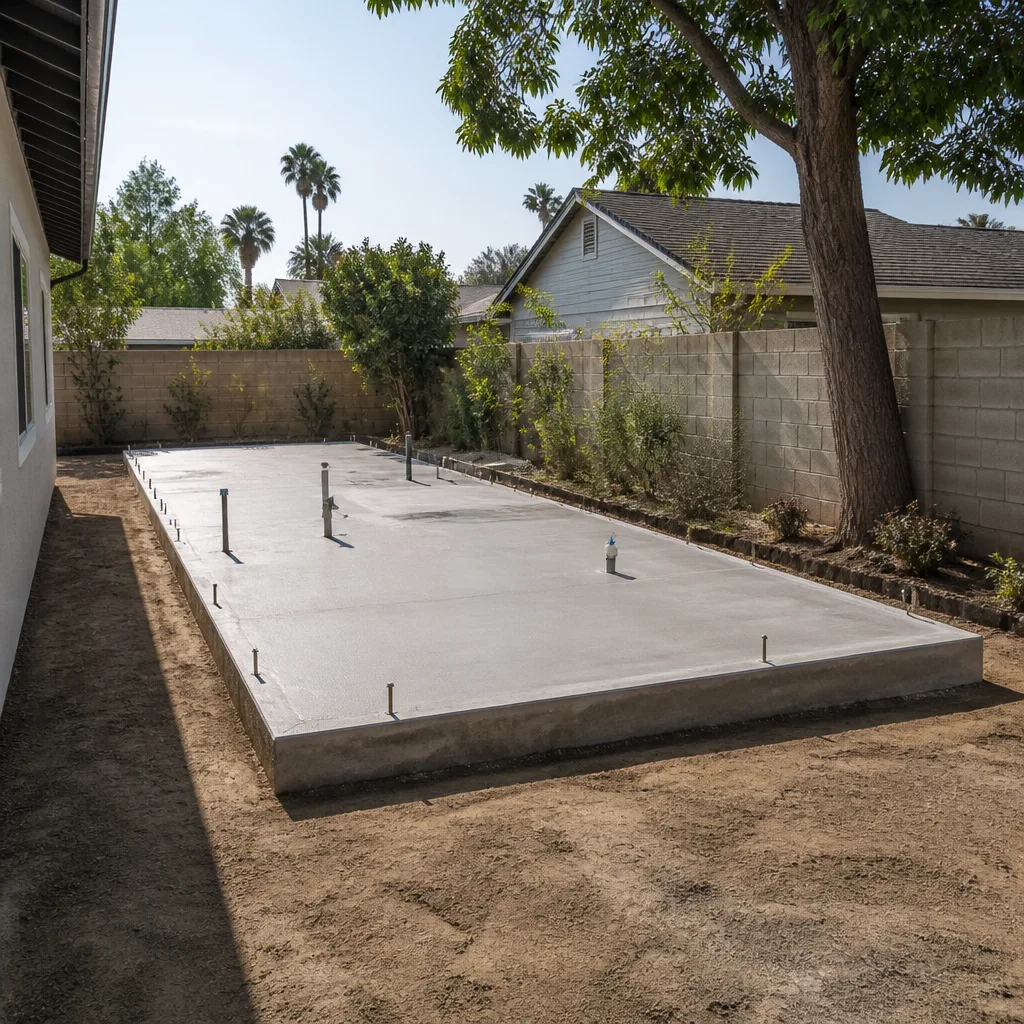
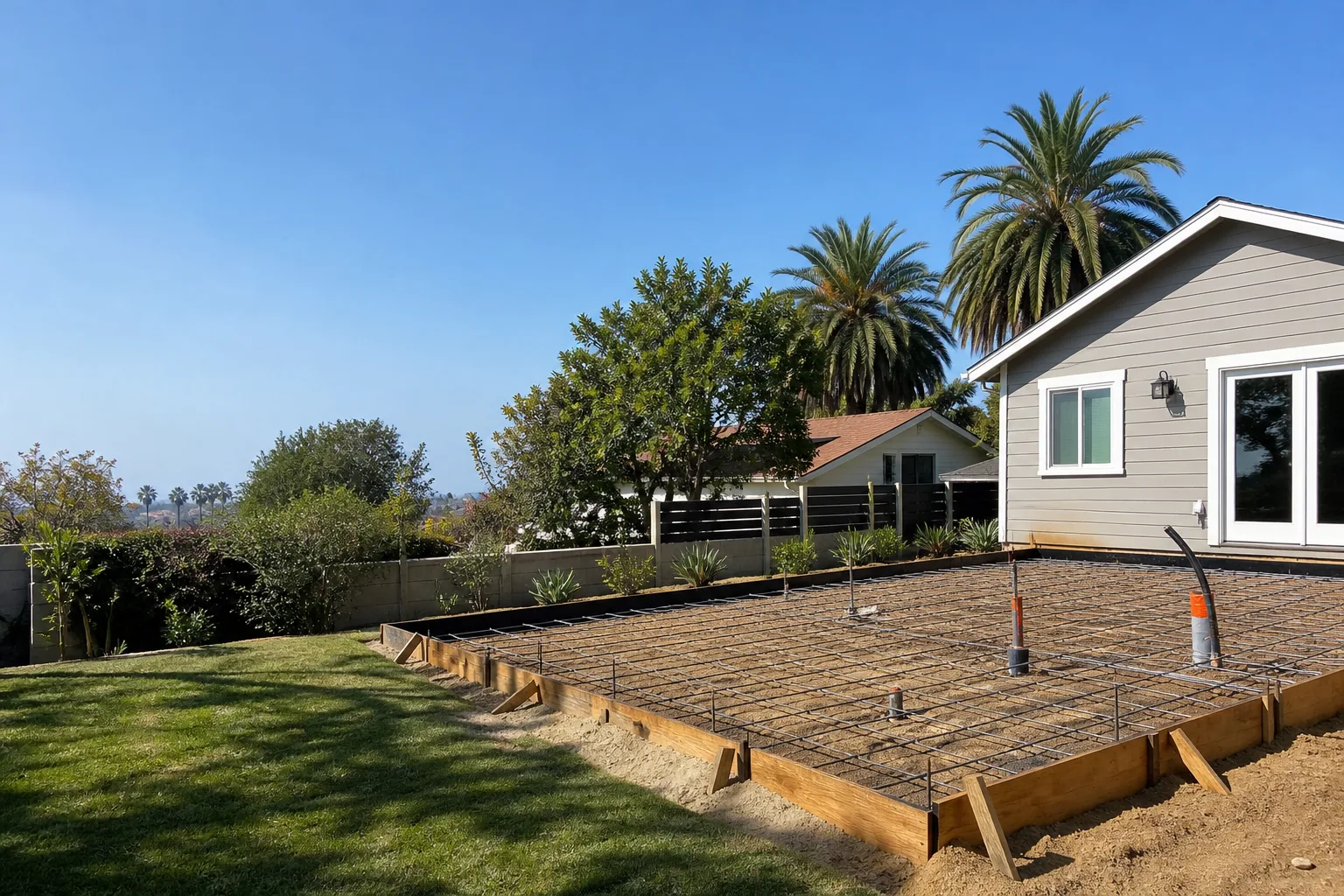
Cover builds panelized prefab units that arrive on a trailer and get craned or rolled onto a prepared foundation. Every Cover model, from the one-bedroom studio to the larger two-bedroom config, needs the same core site work: a level pad or stem-wall foundation, a sewer lateral with proper slope, water service sized for the fixture count, and an electrical connection sized to the unit’s panel. Cover’s specs call for a minimum 100-amp electrical service to the unit in most configurations, and the water service line is typically 1-inch PEX or copper from the meter to the unit, depending on distance and pressure at the street. The compatibility gotcha we see most often: the utility stubs have to land within a tight tolerance window or the final connection gets expensive fast. Cover’s connection points are designed to line up with the stubs, and if your plumber or electrician put the stub 8 inches off, you’re now doing a re-route inside a finished wall, which is nobody’s idea of a good Saturday.
For the OEM-versus-aftermarket decision on the site-prep side, the framing is different than swapping a water heater. Cover doesn’t sell “site prep parts” the way you’d buy a branded filter. What matters is that the materials meet or exceed the spec Cover publishes: the pad’s compressive strength, the sewer lateral’s material and slope, the panel’s amperage and breaker slots, the water line’s inside diameter. We use name-brand materials (ABS or cast iron for sewer under slab, Schedule 40 PVC above ground, copper or PEX-A on water, Eaton or Square D panels and breakers) that meet or beat those specs, and we document every material on the written price sheet before we start. If you’re working with a Cover delivery date already set, tell us the date and we’ll back into the prep schedule from there.
Signs Your Cover Site Prep & Utilities Is Failing
- Water pressure drops when the washing machine kicks on. The water line from the street is undersized for the added fixture load. A 3/4-inch line that fed a single-family house can choke when a second dwelling unit with a full bath and laundry pulls from the same tap.
- Breakers trip when the mini-split and the dryer run at the same time. The subpanel or main panel doesn’t have the amperage headroom the unit needs. Cover’s specs assume a dedicated feeder, and sharing an overloaded 200-amp main with the primary house plus an EV charger is a recipe for nuisance trips.
- Sewer gurgles or drains slow in the ADU after heavy rain. The lateral either wasn’t inspected before connection or has root intrusion where it ties into the city main. Long Beach has mature trees everywhere, and roots find old clay pipe joints like they’re getting paid.
- The pad has visible cracks or a door that sticks in humid months. Soil movement is real in Long Beach. If the base wasn’t compacted to spec or the pad wasn’t reinforced for expansive soil, you’ll see hairline cracks within a year and a door frame that shifts with the moisture content in the ground.
- The utility trench has settled, leaving a visible dip or soft spot in the yard. Trench backfill that wasn’t compacted in lifts settles over time. It’s cosmetic at first, but it tells you the original site work was rushed, and the same crew may have cut corners on the things you can’t see.
Key Takeaways
- Site prep and utilities for a Cover unit in Long Beach runs roughly $18,000 to $45,000, land conditions depending.
- The failures we see are almost always below grade: sewer laterals, undersized water lines, panel capacity, pad settlement.
- Benson ADU Long Beach stocks the common hardware and materials, so prep work doesn’t wait on a parts backorder.
- We’re independent, not Cover-affiliated, but we know their spec sheet cold.
- Every price is in writing before work starts, and the 365-Day Done Right Promise covers the site work for a full year.
Replacement Cost & What’s Included
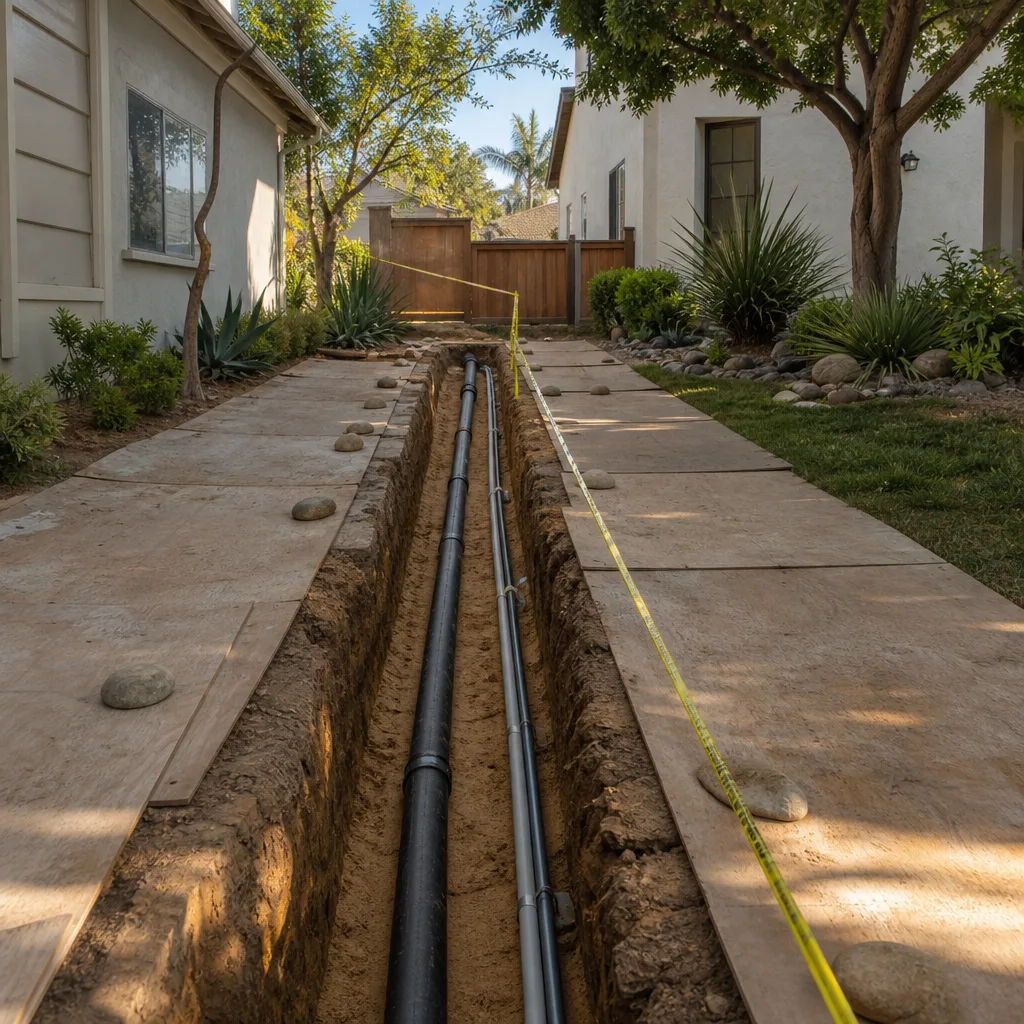
For Long Beach lots, here’s the honest math. A straightforward pad on flat ground with the main sewer and water within 30 feet of the unit: $18,000 to $25,000. Add a long sewer run, a panel upgrade from 100 to 200 amps, or trenching through a backyard with mature tree roots, and you’re at $30,000 to $45,000. What drives the spread is what’s underground: soil type, distance to the city main, whether the existing panel has breaker space or needs a service upgrade, and whether the pad needs engineered fill or is on stable native soil.
| Line Item | Typical Long Beach Range | Notes |
|---|---|---|
| Foundation pad (compacted base, forms, concrete, anchor bolts) | $7,000 – $14,000 | Depends on pad size, access, and soil compaction requirements |
| Sewer lateral (excavation, pipe, connection, backfill, inspection) | $4,500 – $12,000 | Long runs or deep mains push this up; root conditions matter |
| Water service (line from meter to unit, trench, fittings) | $2,500 – $6,000 | 1-inch line standard; distance from meter is the variable |
| Electrical (subpanel, feeder, trench, conduit, connections) | $3,500 – $9,000 | Panel upgrade to 200A adds $3,000 – $5,000 if needed |
| Grading, drainage, and site cleanup | $1,500 – $5,000 | Sloped lots or heavy vegetation add cost |
Every quote we write in Long Beach is a line-item price: materials separated from labor, no allowances that “might” change once the trench is open unless we hit something truly unforeseen, and even then we call you before we spend a dollar more than the agreed number. The workmanship on our site prep and utility connections is covered by the 365-Day Done Right Promise. If the pad settles in a way it shouldn’t or a connection fails within a year, we make it right, in writing, no invoice.
DIY or Call Us?
Site prep is one of the few parts of a Cover project where DIY is genuinely not an option for most homeowners. Trenching for a sewer lateral in Long Beach means calling DigAlert before you put a shovel in the ground, and if you hit a gas line or a primary electrical feeder, you’re dealing with a real emergency. Pad compaction, sewer slope (a quarter-inch per foot matters more than people think), and panel work are all trade-level tasks where the mistake shows up months later, not during the project. What you can do safely: verify your panel’s current amperage and breaker count so you can speak intelligently with us about what you already have, and walk your yard to spot where the sewer cleanout is and where the meter sits. Knowing those two points on your own lot makes your first call to us a lot more useful. For anything that involves digging, connecting to the city main, or touching the panel, call (562) 362-3885. We do this work for a living, and the liability math on a DIY trench collapse or a wrong-wire panel isn’t a math anyone should do at home.
FAQs
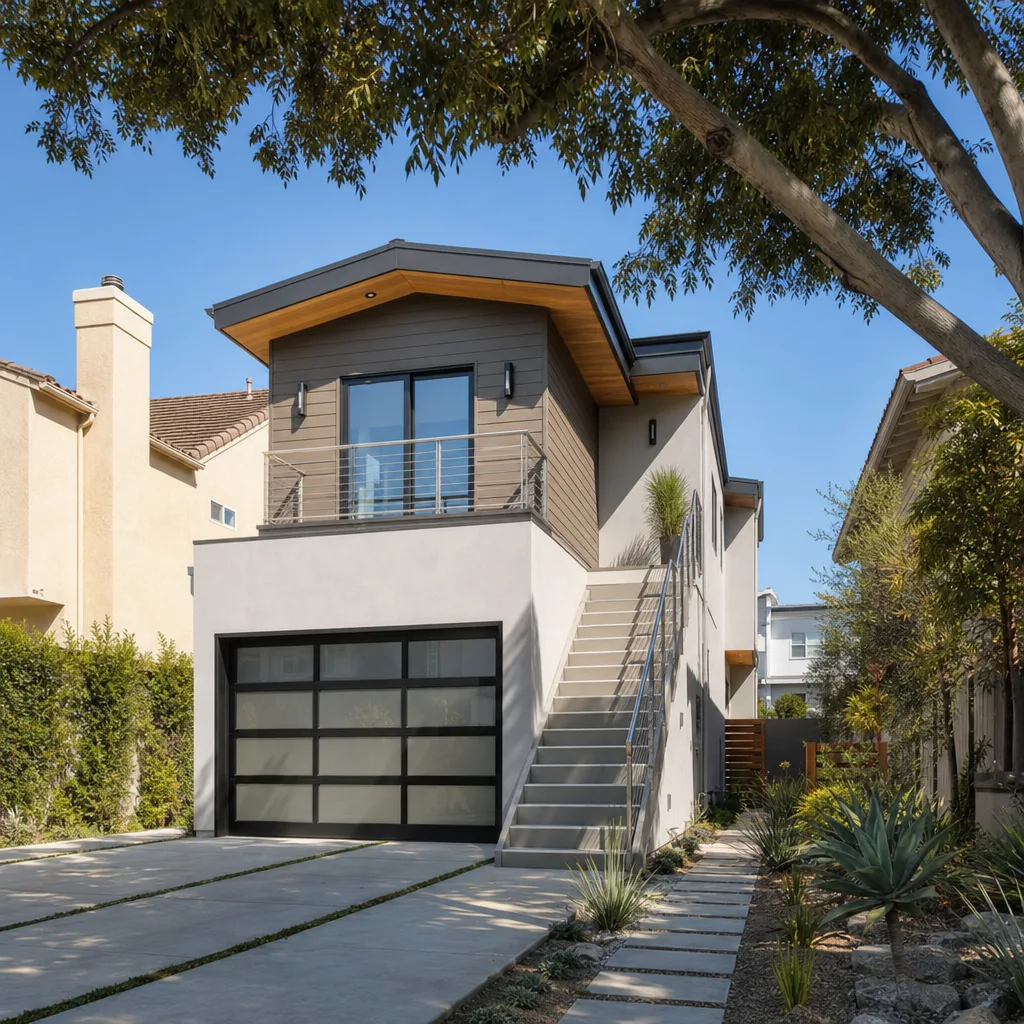
Done right, site prep should be effectively permanent: a properly compacted pad with correct reinforcement will outlast the unit on top of it, and a sewer lateral in new ABS or cast iron is a 50-year-plus installation. Water lines and electrical feeds have similar lifespans. What shortens that in Long Beach is soil movement, roots, and original workmanship. That’s why the prep phase matters more than any other single decision on a Cover project. Call (562) 362-3885 if you want us to look at what you’ve got before the unit arrives – a site evaluation now is cheaper than an open trench later.
Sometimes. A sewer lateral with one bad section can often be spot-repaired or relined without re-trenching the whole run. An undersized water line can sometimes be augmented with a booster pump or a larger line only where it matters. A settled pad is the hard one: once concrete has cracked due to base failure, you’re usually looking at slab jacking or replacement, and patching rarely holds in expansive soil. We’ll give you an honest answer on repair versus replace before we propose anything. For a written assessment, call (562) 362-3885.
Most Cover site prep in Long Beach takes two to four weeks from the first dig to final inspection, assuming no major surprises like a collapsed city lateral or a panel replacement that requires SCE coordination. Weather matters less in Long Beach than it does inland, but rain can delay compaction and concrete work. If you have a Cover delivery date locked, we’ll schedule around it and keep you updated with photos at every stage. Call (562) 362-3885 and we’ll give you a realistic timeline for your specific lot.
We stock the common materials: 4-inch ABS for sewer, 1-inch PEX and copper for water, Schedule 40 conduit for electrical, and the standard anchor bolt patterns and hold-down hardware Cover’s specs call for. For panel upgrades we pull from our regular supply houses in the Long Beach area, and for anything long-lead we order it the same day we sign your quote so the schedule doesn’t slip. We also work with Abodu and Dvele units, so we keep cross-compatible hardware on hand that covers multiple prefab brands.
Our written price is the price, full stop. If we open the trench and find something genuinely unforeseeable, a buried oil tank, a gas line where the city said there wasn’t one, a collapsed clay lateral, we stop work and call you with a number before we spend another hour. You approve it, or you don’t, and we don’t proceed without your sign-off. That’s what “every promise in writing before a single shovel turns” means, and it’s how we’ve done it on every Long Beach project since day one.
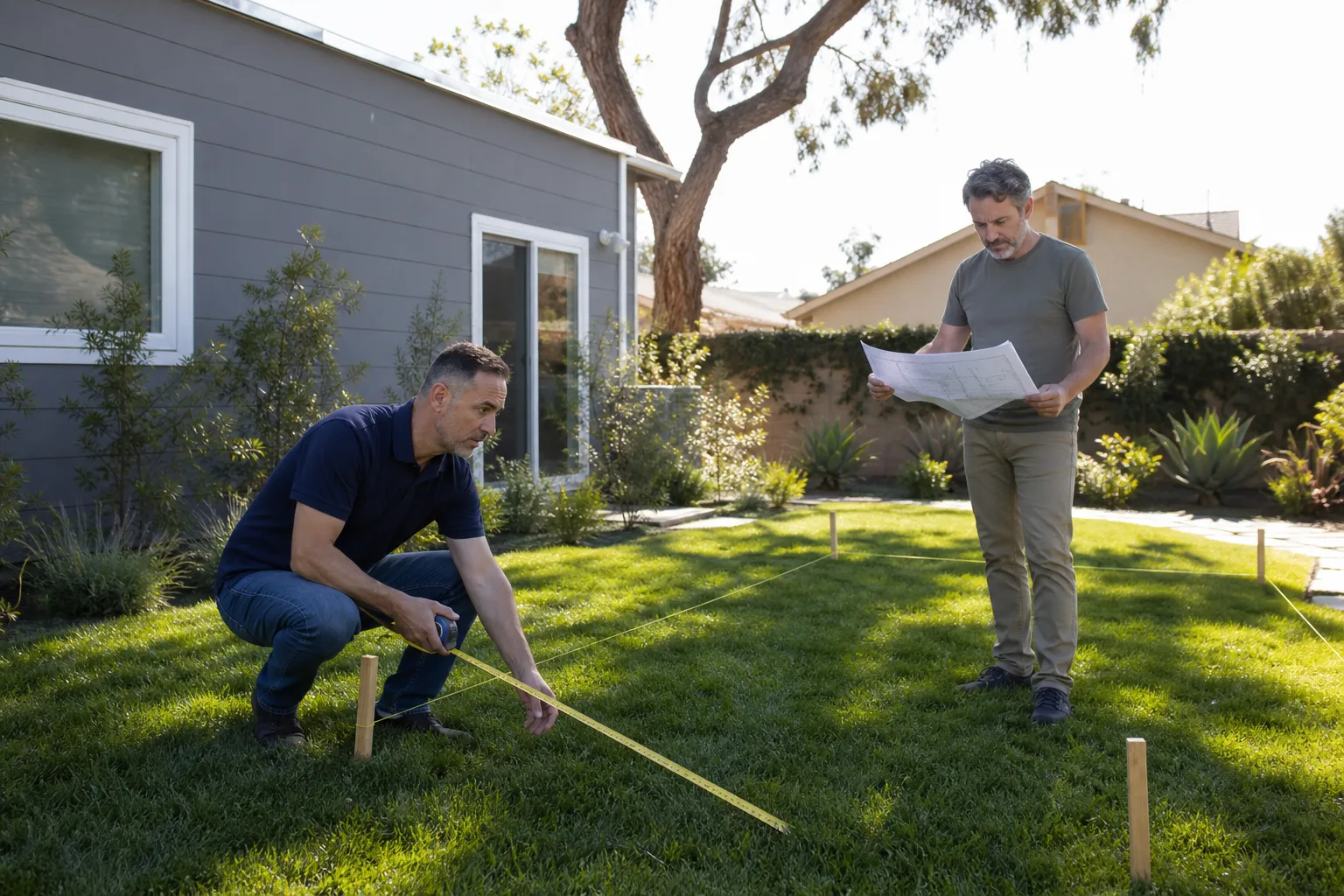
Site prep is the least visible and most consequential work on a Cover project. The unit sits on it, connects through it, and drains into it. If the prep is wrong, the unit is wrong, and no amount of nice fixtures fixes a sewer line that backs up every December. Call Benson ADU Long Beach at (562) 362-3885 to schedule a free site evaluation. We’ll walk your lot, check the panel, find the sewer, measure the distances, and put a written price in your hands before you commit to anything.
Written by Troy Eastman, Owner & Lead Builder, Benson ADU Long Beach at Benson ADU Long Beach, serving Long Beach and nearby areas.