Plant Prefab Site Prep & Utilities: The Long Beach Owner’s Guide
If you’ve got a Plant Prefab module sitting on your lot in Long Beach and the site work underneath it is failing, here’s the straight answer: we stock and install Plant Prefab-compatible site prep and utility connection components, with typical installed pricing running $4,800 to $18,500 depending on scope, and most utility tie-in repairs completed in two to five working days. Site prep and utilities covers everything from the foundation pad and anchorage system to sewer laterals, water service, electrical feeders, and grading around the module. Owners usually catch the problem one of three ways: a utility bill that spikes, a module that’s no longer level, or water pooling where it never pooled before.
Benson ADU Long Beach is an independent contractor. We’re not affiliated with Plant Prefab, and we say that up front because it matters: we work on these systems every week, but we don’t pretend to be the factory.
Key takeaways:
- Typical site prep and utility correction in Long Beach runs $4,800 to $18,500 installed, depending on what failed and how deep the fix runs.
- Most utility tie-in failures show up as settling, drainage problems, or flickering circuits within the first two years.
- We carry the common pipe, conduit, and connection hardware for Plant Prefab modules on our trucks, so we’re not burning billable hours running to a supply house.
- Every quote is a written price before work starts, with no change orders unless you ask for a change.
Which Plant Prefab Models This Applies To
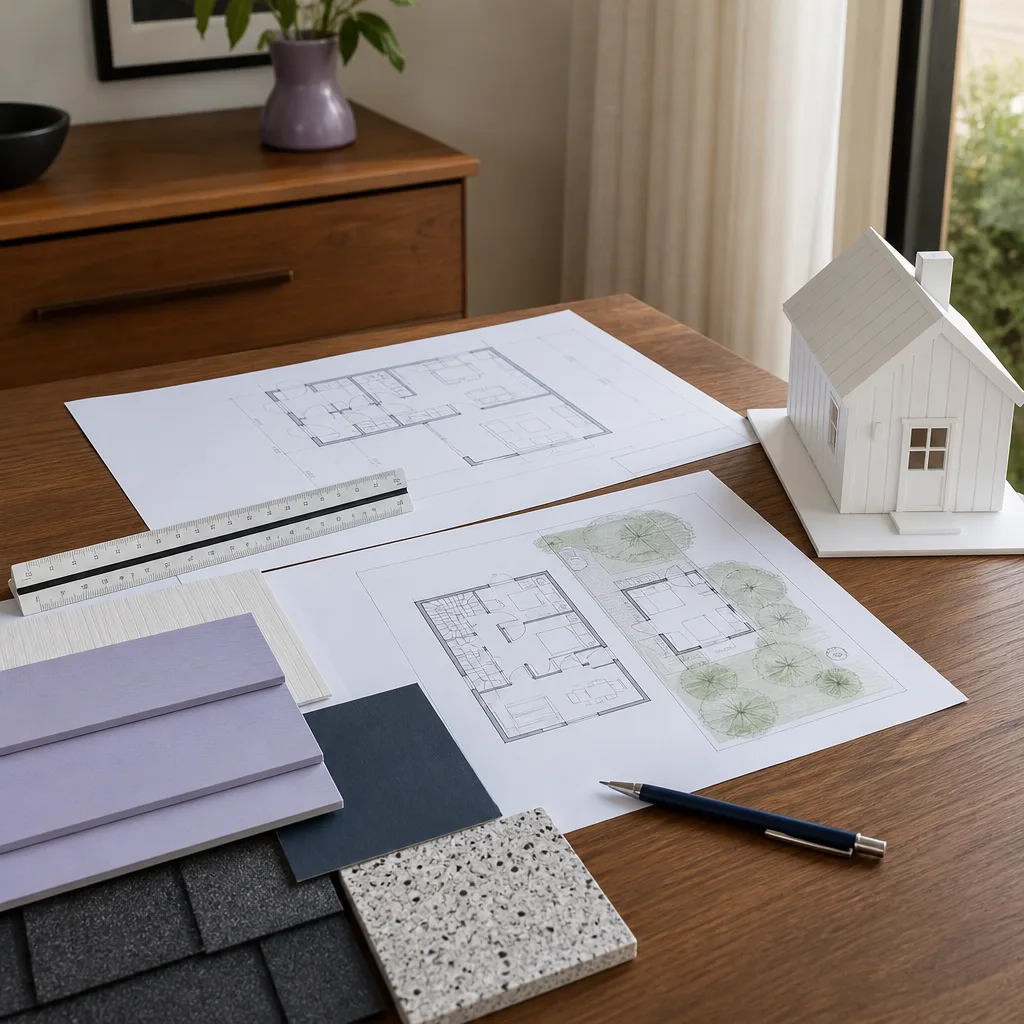
Plant Prefab builds panelized and modular homes in several series, and site prep requirements shift with the model. The LivingHome series ships as factory-built modules that land on a perimeter foundation or a raised pier system. The panelized custom homes arrive as wall panels, floor cassettes, and roof trusses that get assembled on site, which means your utilities and slab work get sequenced differently than a modular drop. The compatibility gotcha we see most in Long Beach: the older LivingHome 1 and 2 lines were engineered for a 4-inch concrete slab with specific anchor bolt patterns, while newer LivingHome 6 and 10 models often call for a reinforced stem wall or a raised floor system. If your site prep was done for one series and you’re bringing in a different module, the anchor points and utility stub locations won’t line up.
To identify what you need, check the module’s shipping plate or the electrical panel door for the series designation. Measure your anchor bolt spacing from center to center, because Plant Prefab changed that dimension between generations, and the aftermarket anchor kits we stock cover both the 12-inch and 16-inch on-center patterns. For site prep hardware like hold-downs, sill gaskets, and shear wall connectors, OEM parts from Plant Prefab are fine but priced like factory parts usually are. We carry quality aftermarket equivalents from Simpson Strong-Tie and USP that match or exceed the load ratings, and we’ll tell you which one we’d use on our own property.
Signs Your Plant Prefab Site Prep & Utilities Is Failing
- Doors and windows that stick or won’t latch cleanly. This is settlement, plain and simple. In Long Beach’s coastal clay and former wetland areas like the Wrigley district, differential settling is the number one reason modules go out of square, and it usually traces back to undersized footings or bad compaction.
- Water pooling under or around the module after rain. Grading that was done too flat, or drainage that was never tied to the street, shows up fast. Long Beach only averages about 12 inches of rain a year, so when it does rain, a bad grade becomes obvious.
- Sewage smell near the module or slow drains throughout. A failed sewer lateral or a bellied pipe under the module means waste isn’t flowing out at the right slope. We run a camera before we dig so we know exactly where the sag or break is.
- Flickering lights or breakers that trip when two appliances run. Plant Prefab modules often arrive with a 100-amp subpanel, and if the feeder line from the house or utility drop is undersized for what you’re actually running, you’ll feel it. The fix is usually a conductor upgrade, not a panel replacement.
- Cracks in the slab or gaps at the marriage line between modules. Hairline cracks are normal. Quarter-inch gaps or vertical displacement between two module halves means the piers or perimeter footing are moving independently, and that needs shimming and likely a compaction correction under the affected section.
Replacement Cost & What’s Included
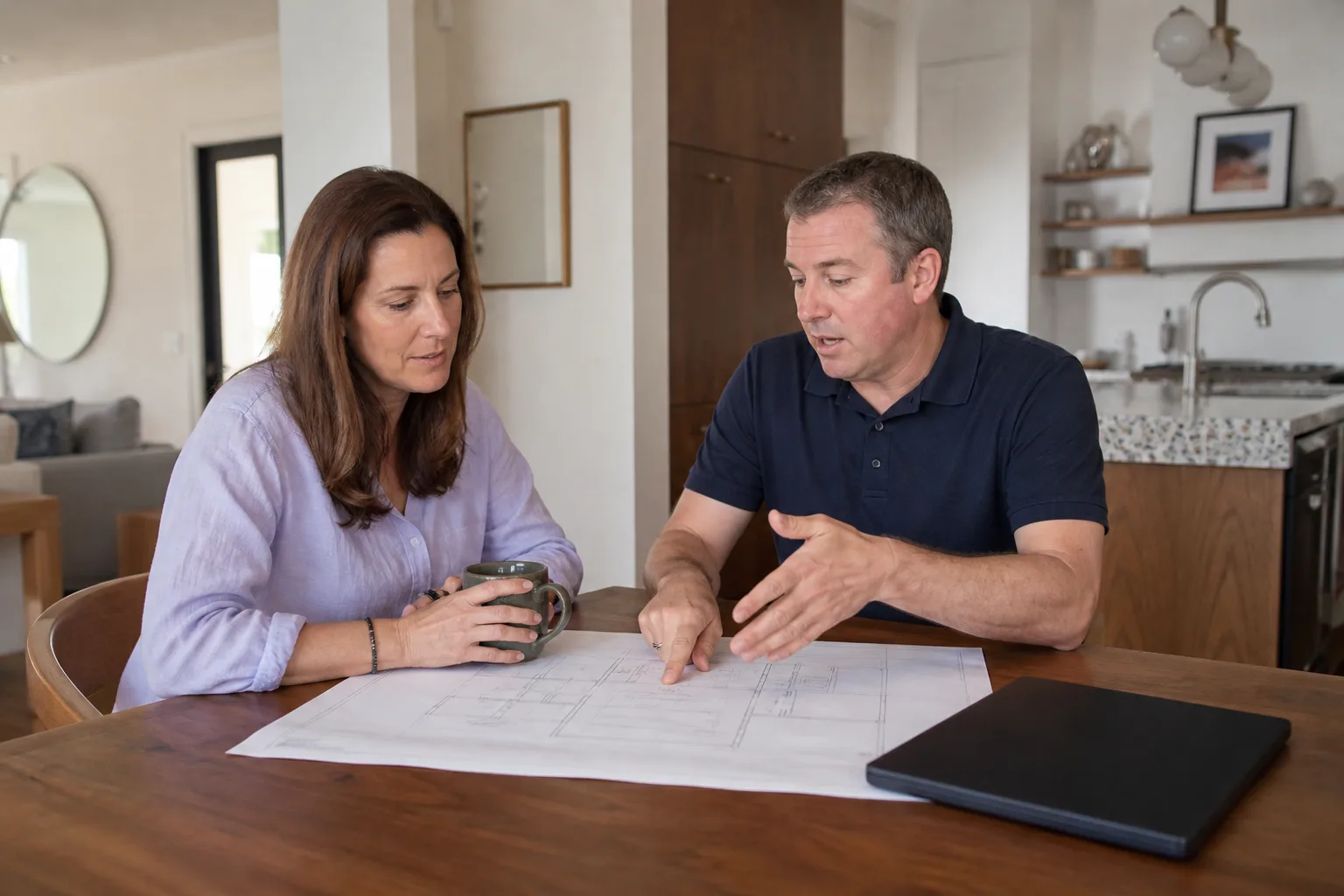
In Long Beach, here’s the pricing reality we give customers before they tap call:
- Site regrade and drainage correction: $4,800 to $9,500, including soil excavation, proper slope to daylight or a dry well, and compaction testing.
- Sewer lateral repair or replacement under the module: $6,200 to $12,800, camera inspection included, trenching, pipe replacement, and backfill with certified compaction.
- Water service leak repair or re-run: $3,500 to $7,200, from the meter or main shutoff to the module, including pressure testing.
- Electrical feeder upgrade or repair: $2,800 to $6,500, including conductor replacement, conduit repair, and panel termination.
- Foundation leveling and structural shimming: $5,500 to $14,000, depending on how many points need adjustment and whether we’re on slab or piers.
The spread comes down to access, how deep we have to dig, and what condition the existing work is in. Every project gets a written line-item price before any work starts. No verbal estimates that drift. The 365-Day Done Right Promise covers the work for a full year, in writing, stamped on the project. If something we touched fails in that window, we come back and fix it.
DIY or Call Us?
You can safely walk your lot after a rain and note where water ponds. You can go into the electrical panel and read the breaker labels. You can run a hose at the cleanout and see if it backs up. That’s useful information to have when you call us. What you should not do is trench under an occupied module, touch live feeders, or dig blind around a gas line, because all three carry real risk of injury or creating a problem that costs more than the original fix. Long Beach requires permits for sewer lateral work and any electrical feeder changes, and we pull them and get the inspections signed off. If you’re not sure whether the issue is serious, call (562) 362-3885 and describe what you’re seeing. We’ll tell you over the phone whether it needs a service visit, and the estimate is free.
FAQs
A properly compacted site with correct drainage and code-compliant utility connections should last 30 to 50 years in Long Beach’s climate before anything major needs attention. The weak points are flexible couplings, which can dry out in the coastal salt air in 10 to 15 years, and any section of sewer pipe that settles because of poor backfill.
Yes, in most cases we repair rather than replace. A pipe section can be swapped, a footing can be shimmed, and a grade can be corrected without tearing everything out. The decision comes down to whether the original work has multiple failure points. If we’re trenching the same line twice in three years, replacement becomes the cheaper option.
Drainage regrades run one to two working days. A sewer lateral replacement under a module typically takes two to four working days, including inspection. Foundation leveling with multiple adjustment points can run three to five working days. We give you a written schedule when we give you the written price, and we text photo updates as the work progresses.
We carry the common pipe, conduit, anchor hardware, and connection fittings for Plant Prefab modules on our trucks, including Simpson Strong-Tie hold-downs, sill gaskets, and the two most common anchor spacing patterns. If your module needs a factory-specific component, we order it directly and tell you the lead time before anything gets scheduled.
Your Next Step
If your Plant Prefab site prep or utilities need attention in Long Beach, call (562) 362-3885 for a free estimate. We’ll put a written price in your hands before any work starts, show up in uniform with background-checked technicians, and back the work with a 365-Day Done Right Promise. Troy Eastman and the crew at Benson ADU Long Beach know these systems cold. Every promise in writing before a single shovel turns.
Written by Troy Eastman, Owner & Lead Builder, Benson ADU Long Beach at Benson ADU Long Beach, serving Long Beach and nearby areas.