A free site visit, a check of what your lot allows and a written, line-item price.
Get your free estimateFast, Reliable Home Addition Contractor Across Long Beach
Home additions in Long Beach run between $185 and $420 per square foot for standard site-built work, with most projects landing between $90,000 and $280,000 depending on size, foundation type, and whether you’re in a historic district. That’s the honest ballpark before you even pick up the phone. We’re Benson ADU Long Beach, and we build room additions, second-story additions, garage conversions, and ADUs on the tight, older lots that define this city from the Washington neighborhood to Bluff Heights. If you’re planning to add square footage to a 1920s bungalow or a 1960s ranch, call Troy Eastman and the crew at (562) 362-3885 for a written price before anything gets signed.
Why Benson ADU Long Beach Is Long Beach’s Preferred Home Addition Contractor Company
Long Beach isn’t Lakewood or Signal Hill. The lots are narrower, the homes are older, and the city’s historic-district rules add a layer of review that most contractors never mention until it’s too late. We mention it on the first call because we’ve pulled permits for additions in Bluff Heights, California Heights, and Cambodia Town, and we know exactly which projects need a Certificate of Appropriateness before we can put a shovel in the ground.
Homeowners here keep hiring us because the price we quote in writing is the price we build to. No verbal estimate that morphs once we’re into the foundation. No surprise change orders when we discover what’s behind a 1926 lath-and-plaster wall. Every Benson project carries a 365-Day Done Right Promise: if something wasn’t done right within a full year, we come back and fix it. In writing, on every project.
We also answer the phone. A live person picks up 24/7, which matters when you’re coordinating a construction crew around Long Beach’s 7 AM to 7 PM noise window and you need a straight answer about what’s happening on your job site. Our technicians are background-checked and arrive in uniform, so when we say someone’s coming to your home in the Zaferia district or near the Traffic Circle, you know exactly who’s walking up your driveway.
Our Home Addition Contractor team is part of the Relay Home Co. family, founded in 2006. Scheduling and dispatch run through the brand’s Los Angeles office, but the crews working on Long Beach homes live and work here. They know the difference between a raised wood foundation in Bluff Park and a slab in the eastside ranches.
Garage Addition Contractors in Long Beach
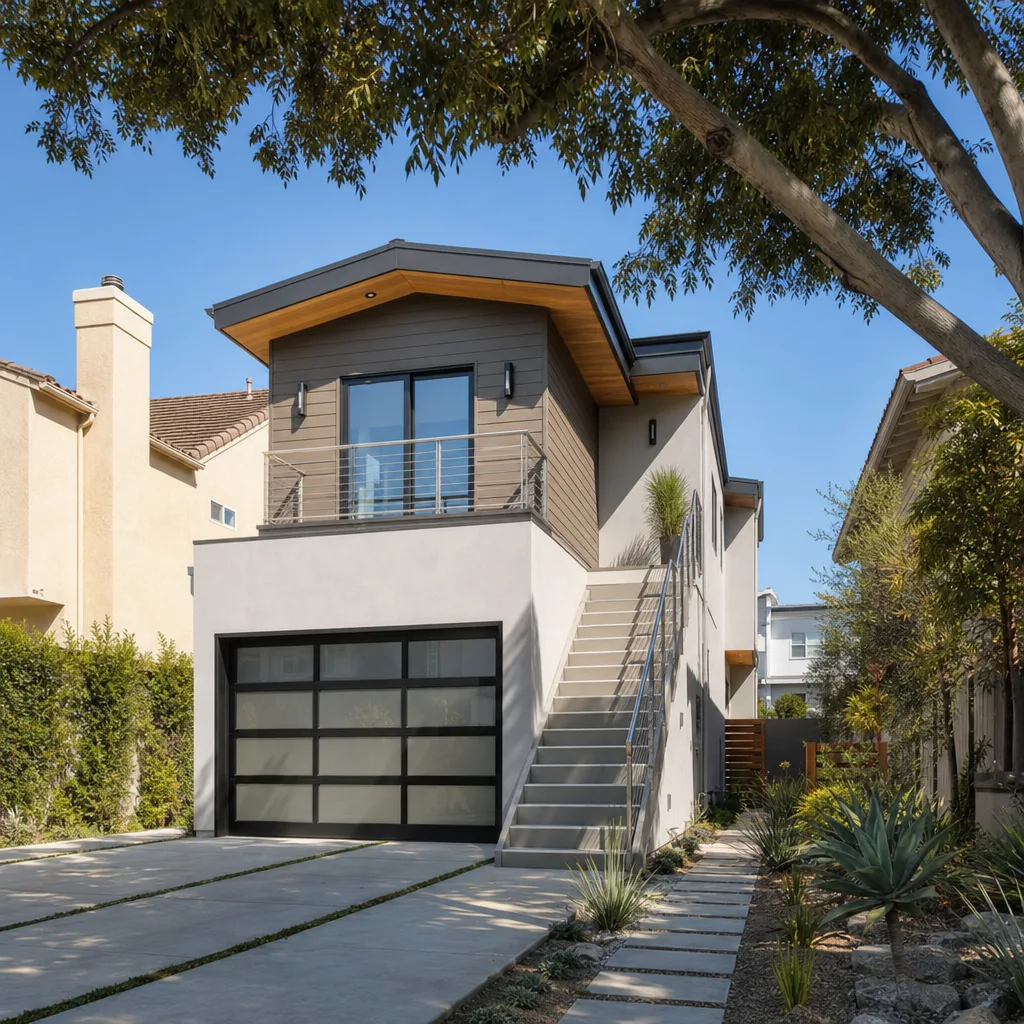
Garage Addition Contractors in Long Beach handle a job that’s become one of the smartest ways to add living space on lots where the main house already eats most of the lot coverage. Many Long Beach homes have detached garages at the rear alley, and converting or rebuilding them into a dwelling unit costs less than a ground-up addition because the footprint already exists. A garage conversion in Long Beach typically runs $70,000 to $140,000, while building a new two-story structure with a garage below and living space above lands closer to $180,000 to $320,000.
A garage addition here means working with what the lot gives you. The 25-to-40-foot-wide parcels mean you’re usually building up, not out. We’ve done multiple projects where the alley-facing garage becomes the foundation for a full ADU stacked above it, which preserves the front yard and keeps the driveway clear for the cars.
Alley-Access ADUs Over Existing Garages
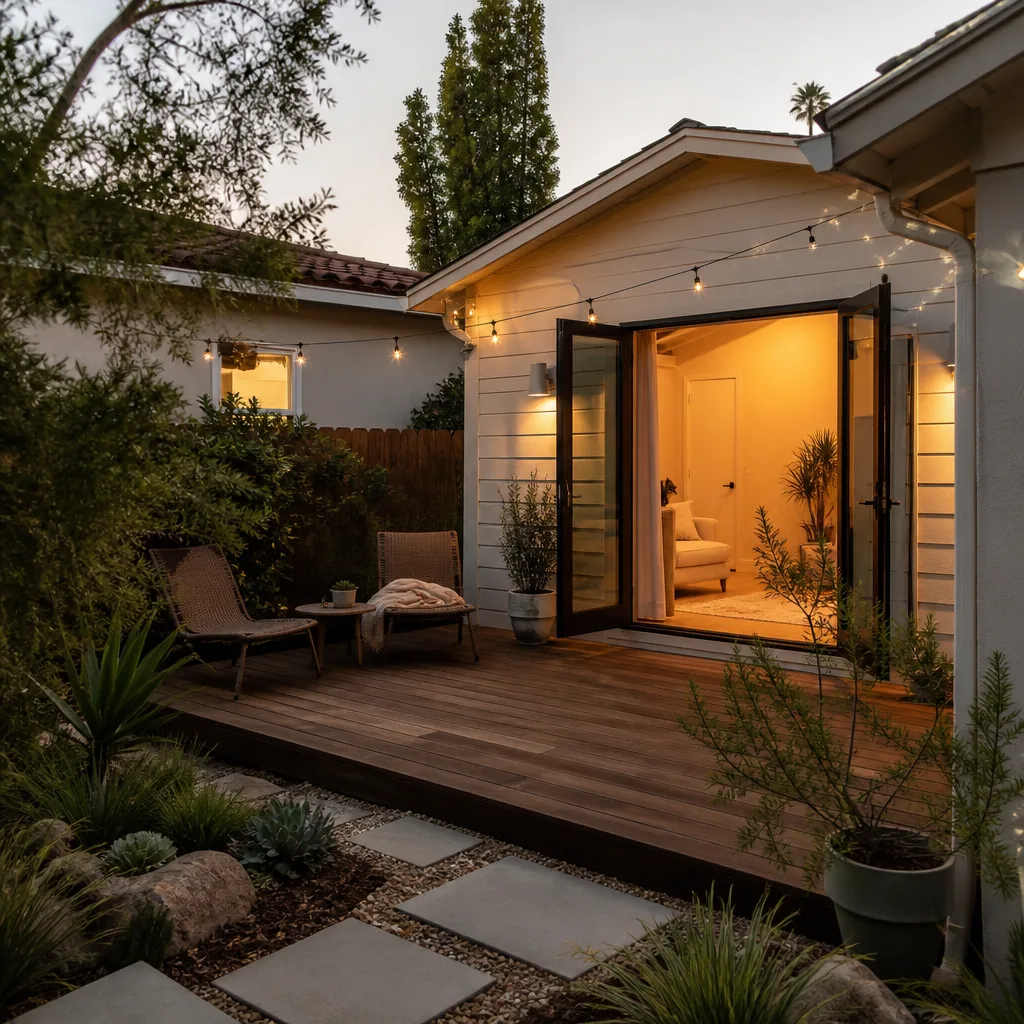
On lots with rear alleys in neighborhoods like the Washington area and Cambodia Town, we often replace an old single-car garage with a new structure that keeps the garage at grade and adds a full living unit above. The city’s 800-square-foot ADU allowance fits neatly into that footprint. The catch is alley access: dumpsters, material delivery, and concrete trucks all have to move through a space that neighbors use daily to reach their own garages. We stage materials in the front yard or on the street when possible, and we keep the alley clear for our neighbors. That planning happens before the quote, not mid-project.
Foundation Work on Raised Wood Homes
Most pre-1940s Long Beach garages sit on raised wood foundations or unreinforced slabs. When we build up over them, we’re usually hand-digging pier footings because a machine can’t get into the narrow side yard without tearing up your neighbor’s fence line. That adds labor cost, but it’s predictable. We itemize it in the written quote, so you see the foundation line before we ever start.
Bathroom Addition Contractor in Long Beach
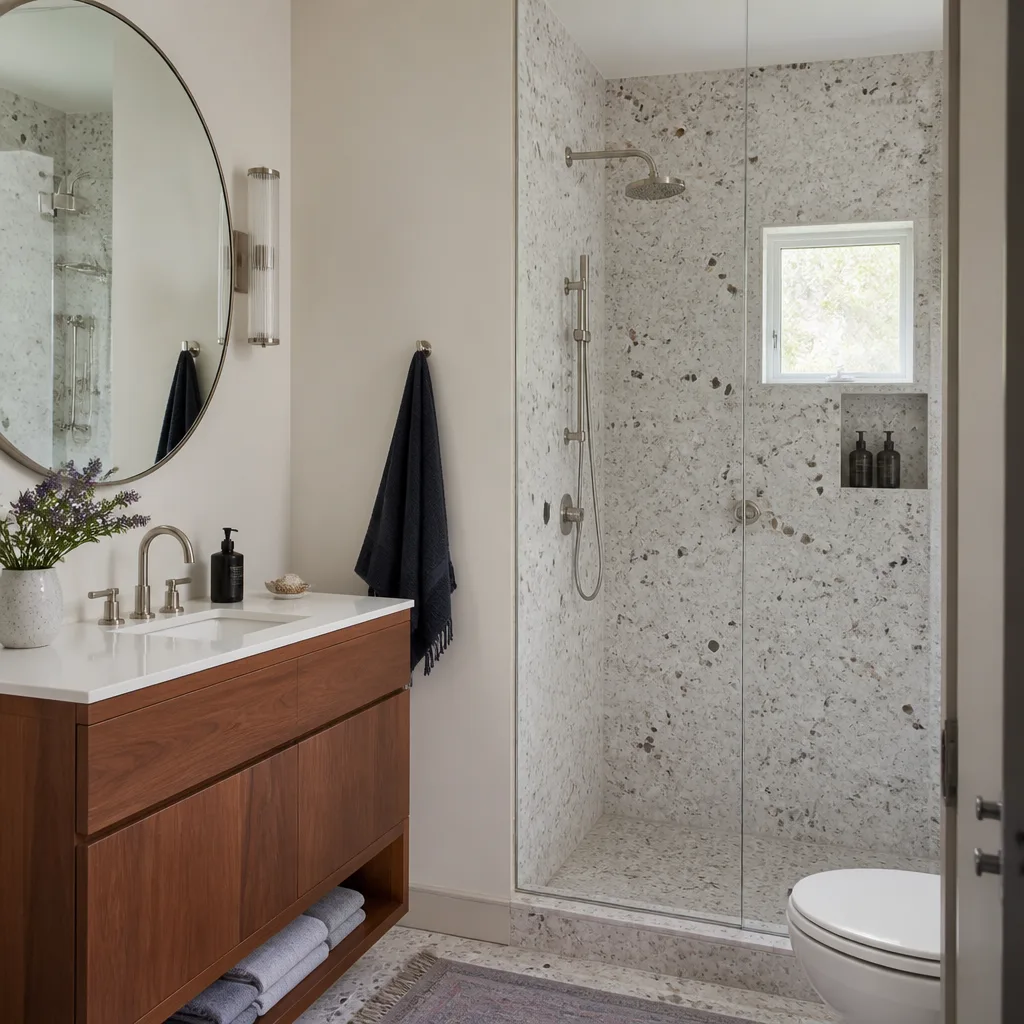
A Bathroom Addition Contractor in Long Beach is a different specialist than a full ADU builder. Adding a bathroom to a 1920s Spanish Revival or a mid-century ranch usually means running new drain lines, tying into an existing sewer lateral, and in many older neighborhoods, working around the fact that the main line may date to the original construction. A standard 5×8 bathroom addition in Long Beach runs $55,000 to $95,000 when it’s inside an existing footprint, and $90,000 to $140,000 when it requires a new bump-out or upper-floor plumbing.
Long Beach’s older housing stock creates a specific plumbing reality: many 1920s bungalows have their original cast-iron waste lines, and they’re buried shallow. Adding a bathroom means a sewer-line camera inspection before we quote, because the last thing you want is a new bathroom tied to a line that collapses six months after we finish. That’s a $3,000 to $8,000 repair you didn’t plan for. We plan for it.
Bathrooms in Bump-Outs and Second Stories
When the addition extends the home’s footprint into the side yard or up into a second story, bathroom plumbing moves to the hardest part of the job: the vertical stack. A second-story bathroom over a crawlspace home needs a properly vented drain that doesn’t fistfight the existing framing. We route these before we frame, not after. It’s the difference between a clean permit inspection and a failed one.
Moisture and Waterproofing in Coastal Air
Long Beach’s marine layer means moisture gets into wall cavities more easily than in, say, Lakewood. Every bathroom we build gets cement board, a full waterproof membrane, and proper venting. Not because it’s code minimum, but because a bathroom in a 1926 California bungalow six blocks from the ocean will show you every shortcut within three years.
Trusted Brands We Service in Long Beach
We build with materials and prefab systems you can research yourself before you ever talk to us. For Long Beach ADUs and additions, we’re authorized to build with Abodu and Cover prefab units, which arrive as factory-built modules and cut on-site construction time significantly. For cladding and exterior finishes, we specify James Hardie fiber cement, which holds up better than wood siding against the salt air and moisture that roll in off the Pacific. If you’re adding a garage, workshop, or storage space as part of your addition, Tuff Shed structures are an option we can quote and coordinate. Because we stock standard parts locally for Long Beach jobs, repair and warranty visits don’t mean waiting for a truck from out of state.
Common Home Addition Contractor Problems We See in Long Beach Homes
- Historic district surprises: Long Beach has over 30 designated historic districts, and homes in Bluff Heights, California Heights, and Bluff Park often need Certificate of Appropriateness review before an addition can be approved. Filing that paperwork late can add 8 to 16 weeks to your timeline – and we’ve seen stop-work orders on projects that ignored it entirely.
- Shared property line disputes: On 30-foot-wide lots, additions often come within inches of the neighbor’s wall or fence. We complete a pre-construction property line survey before any earthwork so we don’t end up with a stop-work order over an encroachment a tape measure could have prevented.
- Raised foundation rot and seismic retrofits: Pre-1940s Long Beach homes sit on raised wood foundations that have lived through every earthquake since the 1933 Long Beach quake. When we tie a new addition into the old framing, we often find sill plate rot or missing anchor bolts that need addressing before the new work can pass inspection.
- Marine-layer moisture intrusion: The June gloom isn’t just a mood. It’s moisture. Homes without proper moisture barriers behind the stucco or siding develop mold in wall cavities, and an addition that doesn’t tie the new weather-resistant barrier into the old envelope will leak where the two meet. We flash that intersection properly on every project.
Pricing for Home Addition Contractor in Long Beach, CA
Site-built additions in Long Beach run between $185 and $420 per square foot. Room additions within an existing footprint land at the lower end, usually $150,000 to $240,000 for a 400-to-700-square-foot project. Second-story additions over a raised foundation push toward the higher end because the entire first-floor framing and foundation often need reinforcement, typically $250,000 to $450,000. Garage conversions run $70,000 to $140,000. Bathroom additions run $55,000 to $140,000 depending on whether they’re inside the existing envelope or part of a bump-out. Sunrooms and basic bump-outs run $45,000 to $120,000. These are Long Beach numbers, not national averages. Labor rates, permit costs, and the prevalence of older foundations here all shape the range. Call us at (562) 362-3885 for a written price on your specific project – the estimate is free, and the number we quote is the number we build to.
How We Handle Long Beach’s Tight Lots, Historic Districts, and Permit Process
Every city has building codes. Long Beach has a whole second layer. The city holds over 30 designated historic districts, which means a home addition on a 1920s bungalow in Bluff Heights or California Heights can require a Certificate of Appropriateness from the Cultural Heritage Commission before a building permit is even issued. That review looks at exterior changes: window styles, roof pitch, siding material, and whether your addition is visible from the street. It’s a hurdle that doesn’t exist in Signal Hill or Lakewood, and it’s the single biggest reason projects in this city stall before they start.
In Cambodia Town and the Washington neighborhood, many of those 1920s craftsmans have tiny front yards and deep backyards. Homeowners there often build a two-story ADU over a new garage to hit the city’s 800-square-foot allowance while keeping the existing driveway and rear yard intact. That’s smart. It also runs directly into the city’s lot coverage rules: on a 30-foot-wide lot, the new garage plus ADU can’t push your total lot coverage past the zoning cap. We run those calculations before we draw, so the plan we take to permit is the plan that gets approved, not the plan that gets sent back for revision twice.
Density creates noise, staging, and neighbor-relations problems. Our crews follow Long Beach’s construction-hours ordinance – work happens between 7 AM and 7 PM weekdays, with tighter weekend limits – and we brief homeowners on what that means for concrete pours and framing days. When we’re working on a zero-lot-line or shared-wall condition, we post proper party-wall notices before we touch anything that abuts a neighbor. On a 30-foot-wide lot in the Washington neighborhood, our crew added a 750-square-foot ADU above a new two-car garage, preserving the existing driveway and rear yard. The home was built in 1926 on a raised wood foundation, so we hand-dug the pier footings and routed utilities through the crawlspace, all while staging entirely within the front yard to keep the alley clear. That’s how you keep the neighbors from calling code enforcement before the concrete has cured.
If your home is in a flood zone near the Los Angeles River, the building code adds floodproofing requirements to any ADU or ground-floor addition, including elevation or dry-floodproofing measures and specific moisture-barrier assemblies. We’ll tell you early whether your property falls into that category and what it does to your budget. The point is simple: in Long Beach, the local rules drive the price and the schedule more than any other factor. We plan for all of it from the first conversation, and we put that plan in writing before you spend a dollar.
We Also Serve Cities Near Long Beach
While this page focuses on Home Addition Contractor in Long Beach, our crews also take on additions and ADUs in Signal Hill, Seal Beach, Lakewood, and Artesia. The historic-district rules and lot patterns change from city to city, and we adjust our approach accordingly. If your property sits just over the Long Beach line, give us a call and we’ll tell you which rules apply.
Serving Long Beach, CA - Our Local Coverage Area
We’re based in the Long Beach area and know this community well. Use the map below to see our service coverage - if you’re nearby, we can almost certainly help.
FAQs About Home Addition Contractor in Long Beach
Lot coverage is the percentage of your parcel that can be covered by structures, and on a 30-foot-wide Long Beach lot, the existing house, garage, and any new ADU all count against that cap. For a typical 30-by-120 lot in the Washington neighborhood, the house may already consume 40 to 50 percent of the lot, leaving limited room for a detached addition before you trigger a variance. The workaround most homeowners choose is building up over the existing garage footprint rather than expanding sideways. We run these calculations on the first visit so you know your square footage ceiling before we draw anything. Call (562) 362-3885 and we’ll calculate your lot’s numbers for free.
Probably yes, if the exterior of your addition or ADU is visible from the street or you’re changing the street-facing facade of the original structure. Long Beach has over 30 historic districts, and Bluff Heights is one of them. The Certificate of Appropriateness review can add two to four months to your timeline, so the filing should happen at the same time as, or before, your building permit application. We file these concurrently so we don’t burn your schedule waiting on a review we knew was coming. If you’re not sure whether your home falls in a historic district, call us and we’ll check the address.
In most cases, yes, and it’s one of the most popular ADU configurations in Long Beach because it preserves the front yard and rear yard. The foundation issues are the real cost driver. Most pre-1940s detached garages in Long Beach sit on unengineered slabs or grade beams that were never designed to carry a second story. We typically need to hand-dig new pier footings alongside the old slab, run new rebar, and sometimes torque down anchor bolts if a seismic retrofit is required. On raised wood foundations, utilities get routed through the crawlspace, which adds labor but keeps the work out of sight. Budget $20,000 to $50,000 for foundation work on a garage-top ADU, depending on what we find when we open the floor.
Construction noise in Long Beach is limited to 7 AM to 7 PM on weekdays, with more restrictive hours on weekends and holidays, per the city’s noise ordinance. Concrete trucks, demolition, and heavy framing all count. We schedule noisy work inside those windows and coordinate with neighbors on alley use, because a citation costs time and a furious neighbor costs more. If your street is narrow or the alley is shared, we’ll give you a staging plan before we start so you know exactly where materials and dumpsters will sit. The plan is part of the written quote.
If your parcel falls in a FEMA-designated flood zone, which affects some areas near the Los Angeles River in Long Beach, your ADU or ground-floor addition must meet elevation or dry-floodproofing requirements. That typically means raising the finished floor above the base flood elevation or installing flood-resistant materials, drainage systems, and a certified flood barrier where water could enter. These measures add cost and require additional engineering and FEMA documentation. We’ll check your flood zone designation before we price the project so the number we quote reflects the real requirement, not a surprise add-on later. For an exact quote on your property, call (562) 362-3885 – estimates are free and written, every time.
Ready to plan your Long Beach home addition? Call Troy Eastman and the Benson ADU Long Beach team at (562) 362-3885 today. We’ll walk your lot, run the numbers, check the historic and flood maps, and hand you a written price before any work starts. That’s how it should work.
Written by Troy Eastman, Owner at Benson ADU Long Beach, serving Long Beach, CA and nearby communities.